
The Defense of Fort McHenry
It was two hundred years ago, and the War of 1812 had dragged on for more than two years. Battles had been won and lost by both sides, with neither gaining any great advantage over the other. Now it was September 1814, and the British, with the complete defeat of Napoleon could turn their attention with renewed vigor, to that annoying little affair with the former colonies. The City of Washington had been sacked and burned, and Baltimore was next. However, the attacking British ships had first to destroy Fort McHenry, which guarded the entrance to the Baltimore harbor.
As it happened, there was a young American lawyer on board the commander’s ship, under a flag of truce, seeking the release of a prisoner taken a short time earlier. His mission had been granted, but permission to leave was denied as the ships were about to go into action against the defending fort. For twenty-five hours the naval force bombarded the fort with cannon fire, bombs, and rockets, remaining out of range of the fort’s cannon. A very large flag flying above the ramparts of the fort was the only evidence that the fort had not surrendered.
The lawyer, Francis Scott Key, watched from the ship during the night, wondering in the morning if the flag still flew over the fort as the firing had ended. “Through the mists of the deep” he watched as “the breeze o’er the towering steep, as it fitfully blows, now conceals, now discloses”, revealed a reflection on the water of the American flag still flying proudly defiant over the ramparts of Fort McHenry. Inspired by the sight, he wrote a poem, called “The Defense of Fort McHenry”. Set to music, we know it as “The Star-spangled Banner”, our National Anthem, stated as such by an act of Congress in 1931.
Next Society Meeting
The next Meeting of the Society will take place on the 7th day of September at the Hanson House at 1 pm. This will be our annual picnic, held outdoors in the back yard. If it should happen to rain, we will move the picnic into the house. Hamburgers, hot dogs and soda will be provided by the society and the members are asked to bring picnic type food to add to the menu. The Society has recently acquired a number of new members and this would be an excellent time to meet and get acquainted with them. Members are invited to bring a friend, if so desired.
Executive Meeting
On August 24, 2014 the members of the Executive Board met at the home of Alice Holzapfel and made plans for the coming year of 2015. Dates were set for our various activities, but they will have to be confirmed with the Cranford Society for the use of the Hanson House, to avoid conflicting with any of their programs. A slate of officers for the new year was also arranged, and will be introduced at the September meeting of the Society.
Do You Remember-
When trolley cars roamed through the streets of Union County? Although they all disappeared around 1935, there was a time when you could travel to almost anywhere in the county by means of those electrically driven vehicles, most of them painted yellow for the Public Service Coordinated Transportation Company. In those days, a single nickel dropped in the fare-box got you a ride within the fare limit, and if you rode further, into the next limit, you dropped another nickel in the box when you got off.
When a nice way to spend a hot summer day was to sit on a bench in the old recreation pier on the Elizabeth waterfront? There was always plenty of marine traffic to watch, with busy tugboats moving barges and oil tankers through the Arthur Kill. Next to the pier was the slip of the little Staten Island ferryboat that shuttled back and forth across the waterway. One day a driver tried to bring a tanker-truck aboard, and he sunk the end of the boat and the cab of the truck. The ferry was out of service for about a week.
When you could purchase a loaf of bread for seven cents, or when you had to slice it yourself? How about crossing the Goethal’s Bridge when the toll was only twenty-five cents, because traffic was so slight? Do you remember when automobile tires had inner tubes and were mounted on split rims? Those rims were a challenge to open without the proper tools, but it could be done. There was a hand-cranked claw-like device that could grab the rim and pull it away from the tire, but everyone did not have that tool. Blow-outs and punctures were some of the common hazards of driving in those days, and a tube repair kit and rubber cement and air pump were standard equipment back then, but a full tank of gas cost about a buck and a half. Oh, for the good old days! Gone but not forgotten.
Pictures From Our Files
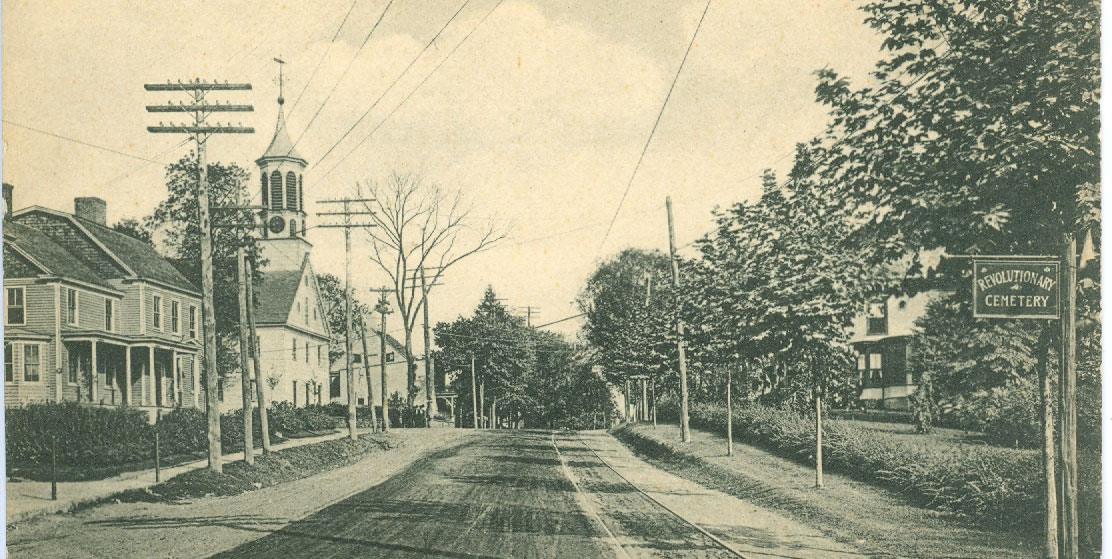
Back on June 23, 1780 the fighting between the invading British and the Continental army of General Washington raged around the Springfield Presbyterian Church on Morris Avenue. During the battle the Americans began to run out of paper wadding for their rifles and muskets. This wadding was an essential for proper loading of those early weapons, without which the guns’ fire would be ineffective. Reverend James Caldwell, chaplain for the defenders, became aware of the problem, and dashed into the church and grabbed an armful of Watt’s Hymnals and tore pages from them. The paper pages were just the right size for wadding and the reverend gave them to the soldiers, shouting, “Give ’em Watts, boys. Put Watts in ’em.” His action helped turn the tide of victory and forced the enemy to withdraw and return to Staten Island, but not before burning the small town and badly damaging the church.
One hundred twenty five years later, in 1905 a statue of a Continental soldier was placed before the restored church, on the smallest state park in New Jersey, only five feet square. A bronze tablet below the statue tells of the chaplain’s act. Our picture of the rebuilt church was taken about 1900, predating that action. What may appear to be the statue is actually a small tree. Electric power lines and trolley tracks on the right side of Morris Avenue suggest the date.
The area around the church has changed quite a bit since the picture was taken. The space on the other side of the street is now a large shopping mall, with its huge parking lot next to the street. It has been named for General Greene, who was in command of the American Continentals during the battle. The trolley tracks have gone, possibly to the war effort, and the roadbed has been widened and paved. The road, barely visible next to the church, that used to take a driver directly to Milburn was cut off and dead-ended just past the cemetery. This was caused by the construction of Route 78 and its access roads. The old road is now named “Church Mall”. About fifteen or so years ago the entire upper portion of the steeple was replaced by an identical new one, because of the old and weakened beams that had supported it.
Over the Back Fence
The air-conditioning of the whole Hanson House is now working very well, and the UCHS office staff wishes to thank those responsible for it. A few aged newspapers have been delivered to our office, and attempts are being made to copy the crumbling paper. Some efforts have been successful. Bill Frolich says that he remembers when he used to sit on his front porch to see if he could count one hundred passing cars before it was bedtime. He usually did not count that many back then.
Frequently Asked Questions
What happened at Fort McHenry in 1814?
British ships bombarded Fort McHenry for about twenty-five hours while staying out of range, and a large American flag flying over the fort signaled that it had not surrendered.
Who was Francis Scott Key and why was he on a British ship?
Francis Scott Key was a young American lawyer who boarded the British commander’s ship under a flag of truce to seek a prisoner’s release, but he was not allowed to leave before the attack.
Why is the Battle of Springfield linked to “Give ’em Watts”?
During the June 23, 1780 battle, Reverend James Caldwell tore pages from Watt’s Hymnals to use as musket wadding, urging soldiers to “Give ’em Watts.”
What is Springfield Presbyterian Church’s role in Revolutionary War history?
The church stood at the center of the 1780 fighting in Springfield, and Caldwell’s actions there became one of the best-known stories associated with the battle.
What did Union County trolley travel look like in the early 1900s?
Electric trolleys once ran widely through Union County, often painted yellow for Public Service Coordinated Transportation, and riders paid with nickels depending on fare zones.
Related Newsletters
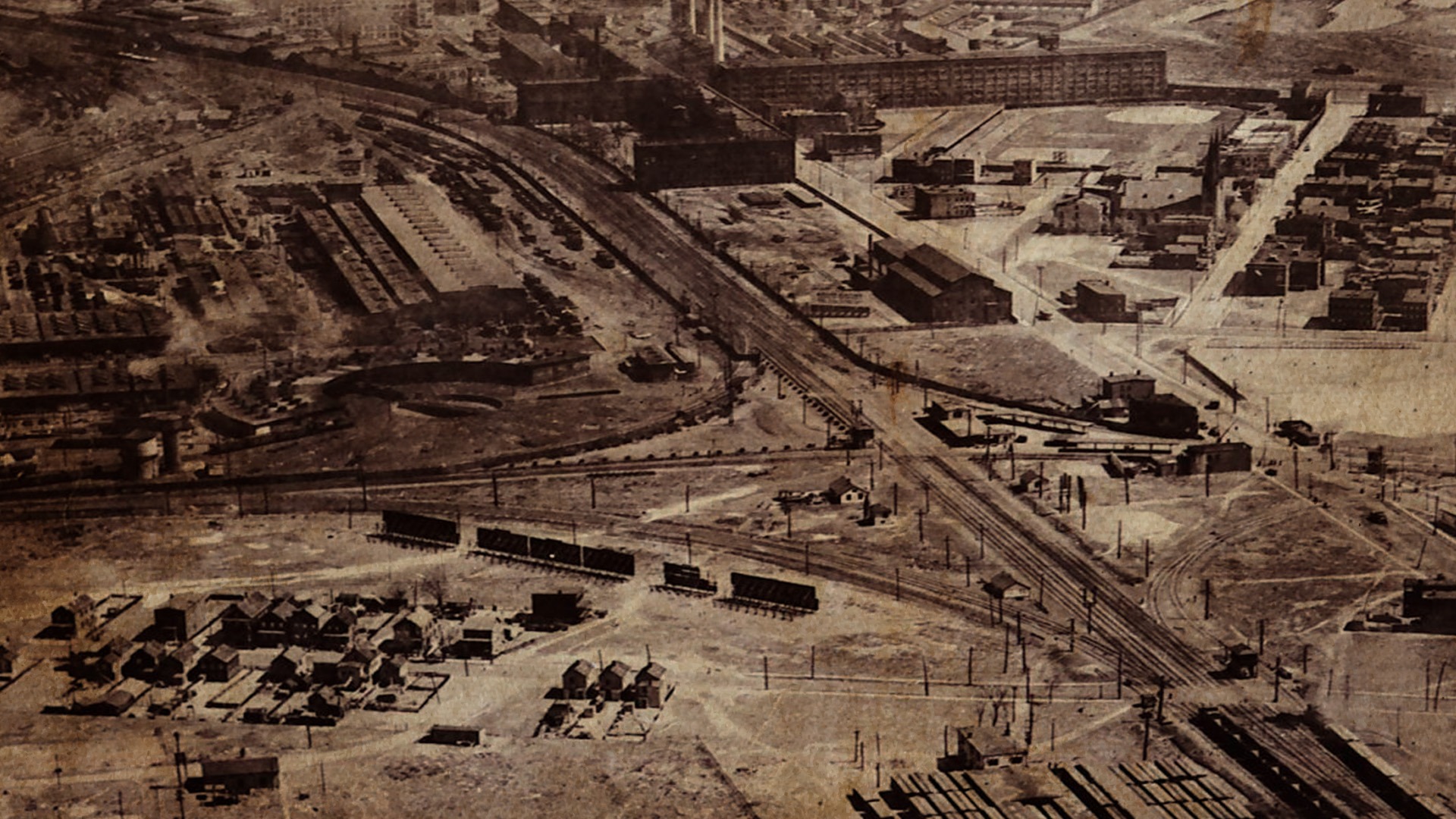
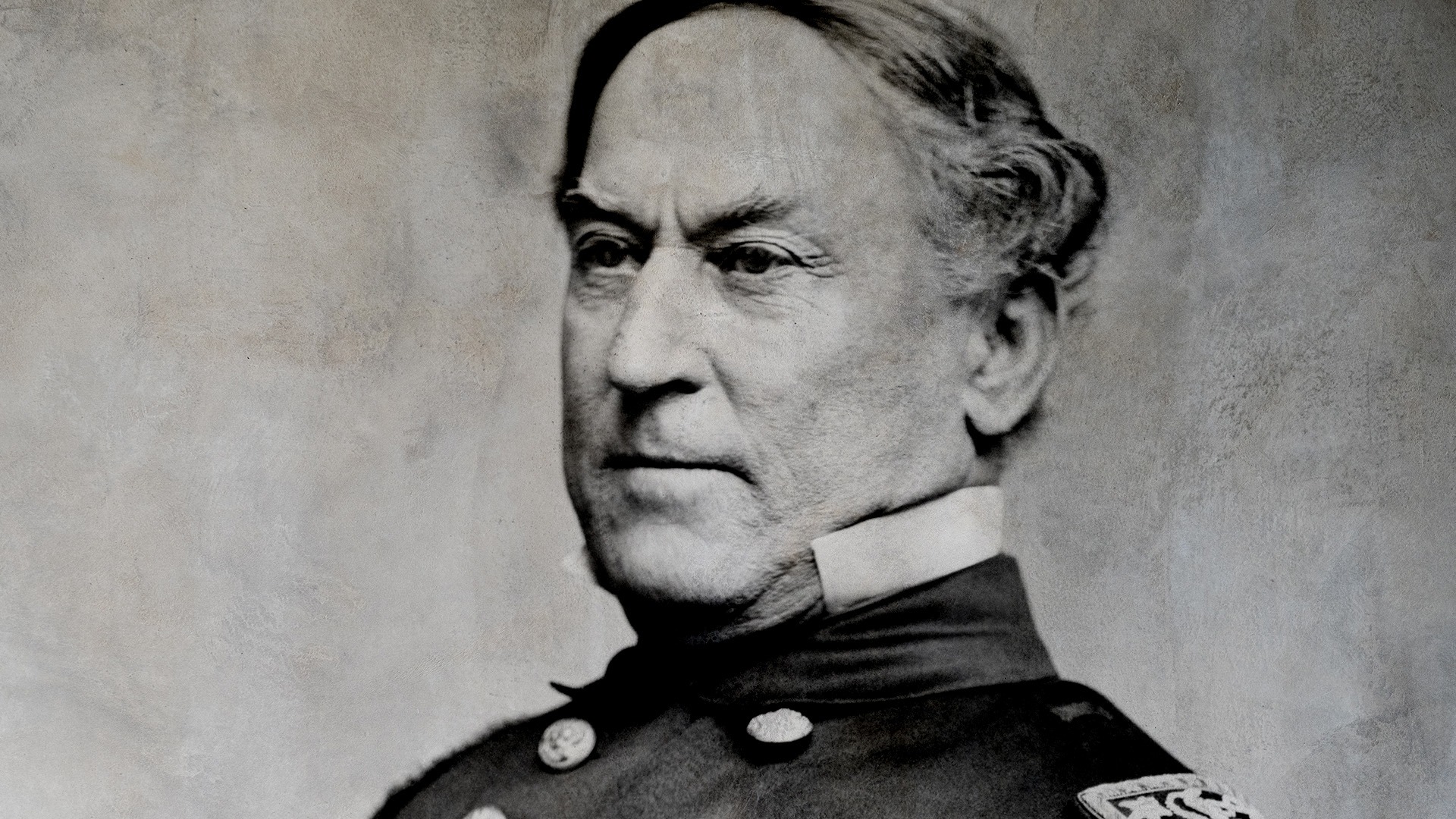
Issue 121 spotlights the Hanson House picnic, antique cars, a Farragut reenactment, and a rare 1923 view of Elizabethport’s rail and Singer-era industry.
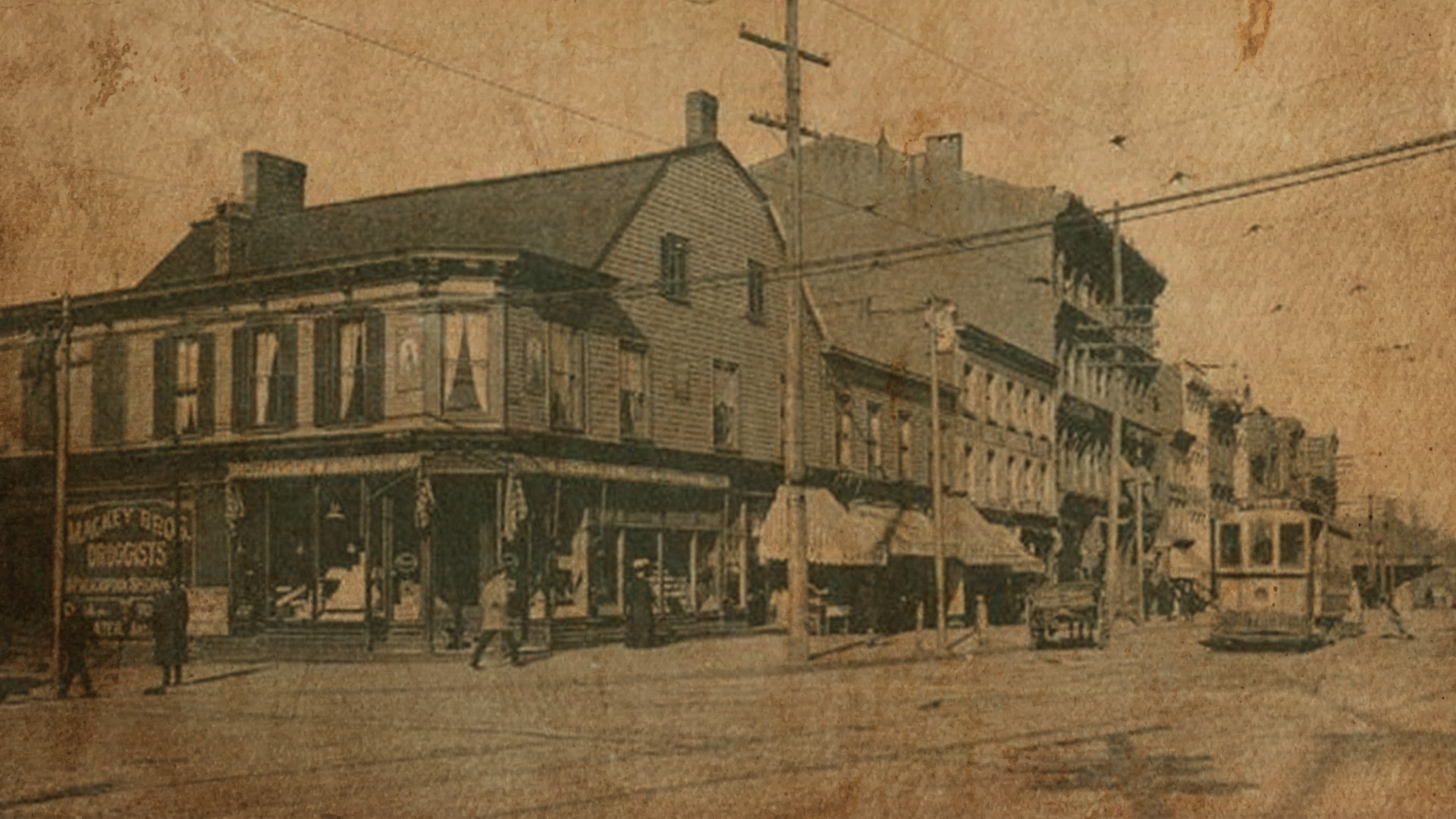
From Hillside’s Woodruff House to a 1910 Elizabeth trolley scene, Issue 119 highlights local life, artifacts, and community history in Union County.


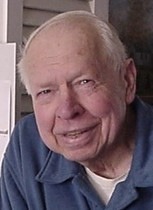 Our longtime friend and Society Treasurer, Bill Frolich, sadly passed away on September 30th 2021. He was 101 years old, a 45-year member of UCHS, and the writer/editor of our Newsletter. Bill and his extraordinary knowledge of Union County history will be greatly missed.