
Meetings
The COVID-19 pandemic has certainly disrupted our plans for the past year and for the new year of 2021.
At our last meeting, held in August, several planned events had to be put on hold as we could not determine
how or where we could have them. Our customary picnic did not happen, and as a result there was no slate
of officers presented for the usual election to be held in October. The present officers will continue
in their positions until an election can be held. Our Holiday Party also became a casualty of the virus.
Once again it is the old familiar cry of, “Wait ’till next year!”
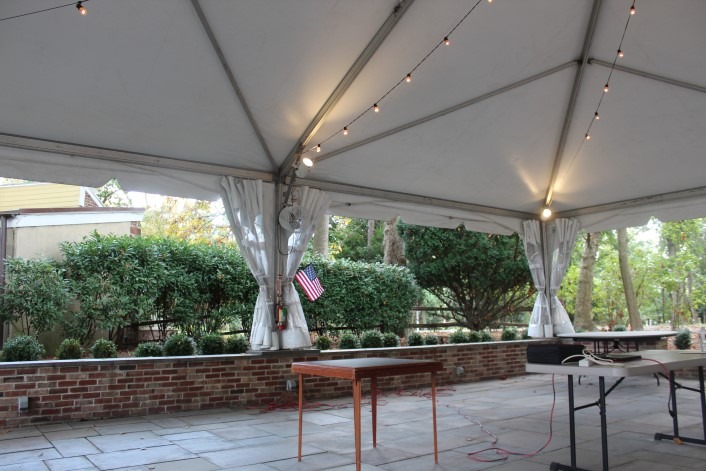
At the October meeting, held in a large tent at Liberty Hall Museum, the program was a slide show presented
by Hannah Gaston of the museum staff. The projected images were surprisingly visible for a program given in
daylight under a large tent.
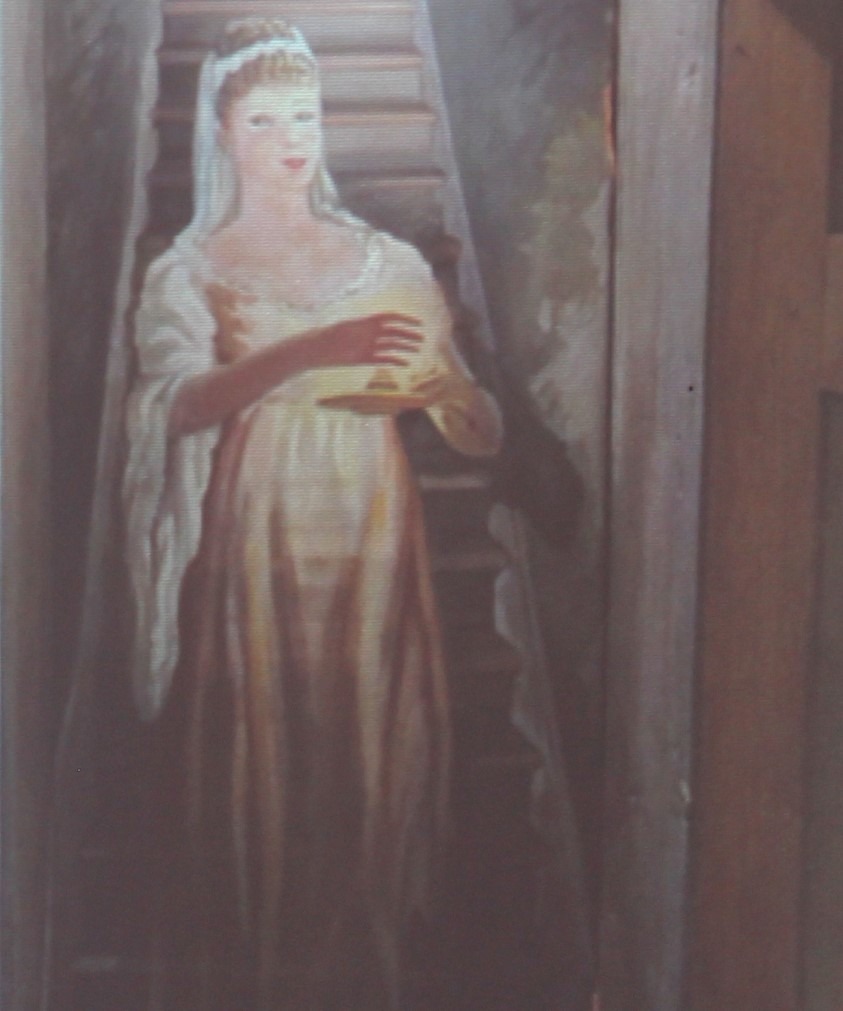
Most of the slides were of members of the Livingston and Kean family, former residents of Liberty Hall,
but one was of Hannah Caldwell, murdered during the Battle of Connecticut Farms on June 7, 1780.
Her ghost, revealed by a flash of lightning during a summer storm and seen by British looters in the
mansion, scared off the empty-handed intruders. Even today her ghost may be said to be seen by visitors
to the museum.
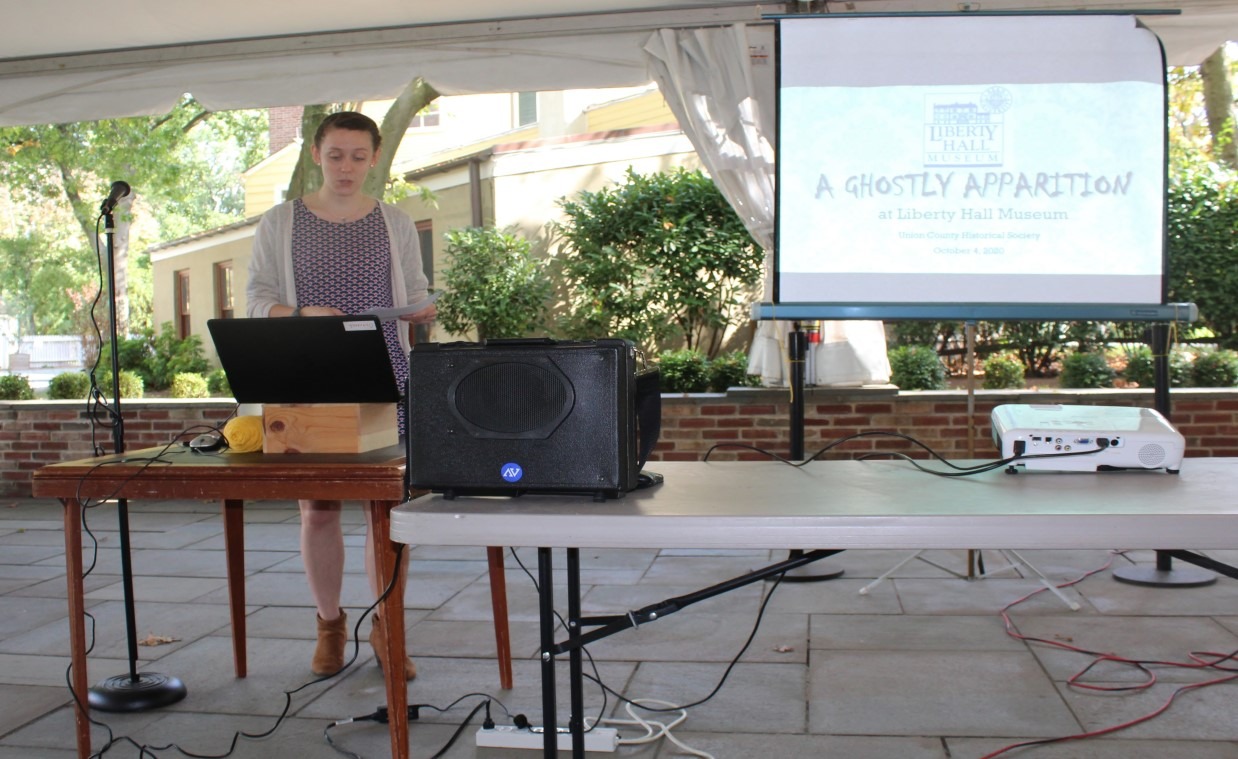
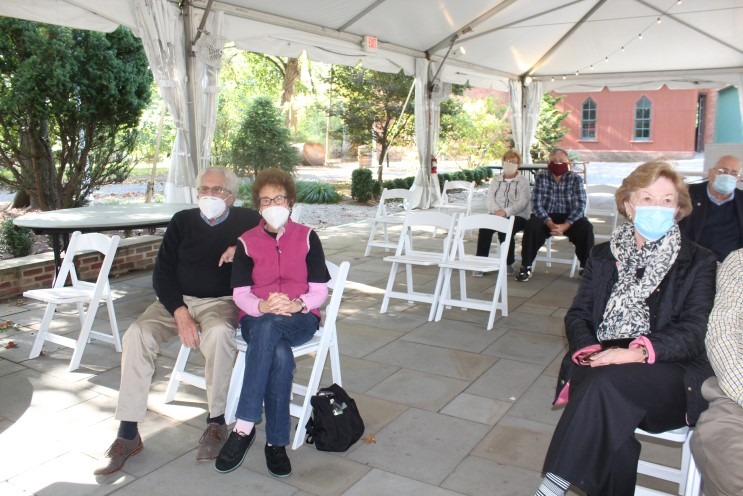
Several pictures were taken at the October meeting, but space limitations prevented using them in the last
issue of the newsletter, so we are presenting them now for your pleasure. At the time we were under a very
large tent. We were careful to observe all of the rules and regulations and wore masks. We all stayed in
separate family groups, with plenty of room between them.

Pictures From Our Files
Oh, for the good old days when you slept tight in your spring-less, rope-strung bed, with a mattress made
of a large bag of corn-shucks! Here we have a picture of such a bed, with the covers turned back to reveal
the rope laced between the side rails, and also the chamber pots on the floor beneath it. As rope under a
strain will stretch in time, a bed-wrench rests nearby. The rope itself is one continuous length that passes
through the holes in the rails and forms a network to support the covers and the sleeping occupant.
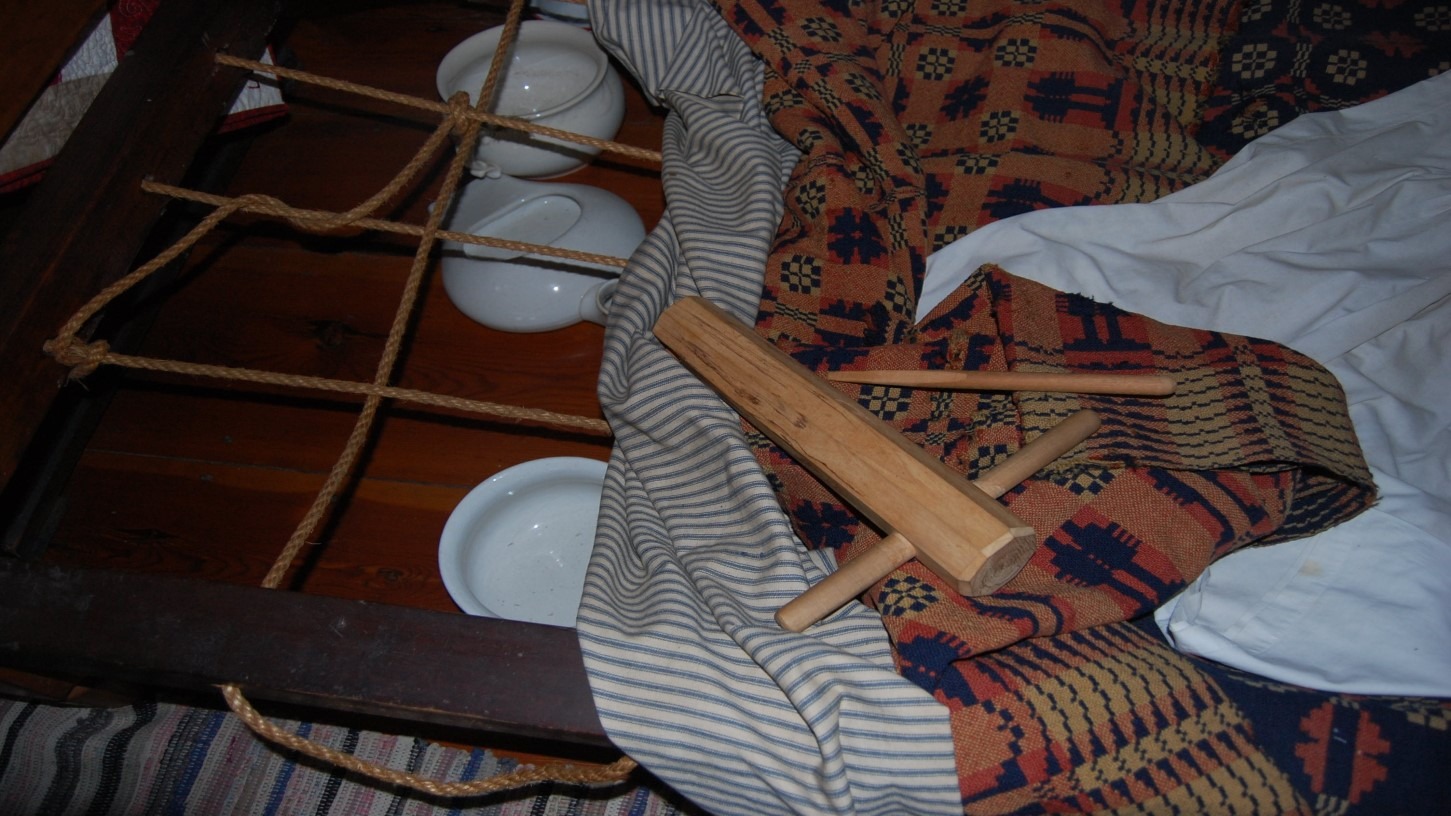
Periodically, the slotted wrench engages a loop of rope and is twisted to take up the slack. A peg is then
wedged into the hole to hold what has been gained and the wrench is moved to the next loop. Finally the entire
slack has been removed and the rope is tied off. For the next several nights the occupant will “sleep tight.”
In this photo a couple of chamber pots are shown, but one is usually sufficient for its purpose. As this house
had no indoor plumbing, a “privy” or outhouse provided the necessary sanitation. No one cared to leave a warm
bed and walk out to the distant “two-holer,” so a chamber pot relieved the problem. As the china lid of the pot
made a distinctly obvious noise in use, some housewives crocheted a “husher” around the edge of the lid to
eliminate the sound.
For the benefit of younger readers who may be unaware of what a “privy” is, we have printed a picture of a
standard design two-holer outhouse, a type used before we had indoor plumbing. Beneath it was a large, deep
hole, where lye was sprinkled frequently over the contents. Smaller privies had only a single hole, but this
one has two, the use of which will be left to your imagination. “Privy” is short for “private.”
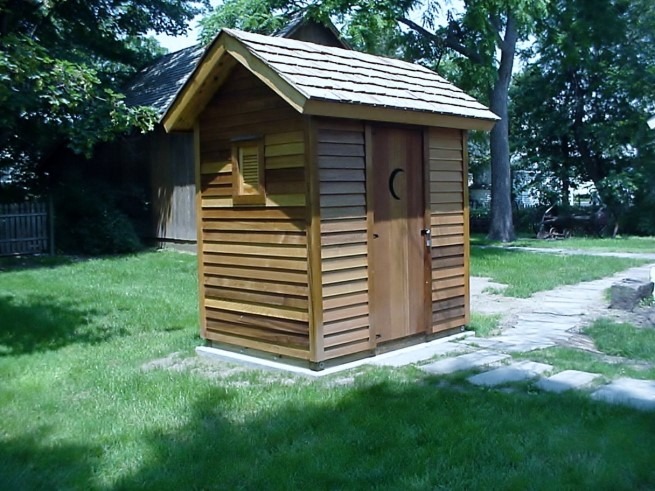
Included within this little building is the thick Sears-Roebuck Catalog, standard equipment for such a
structure. It can be used for reading or other purposes, and rarely has all of its pages. In the days before
city water was piped into all of the houses, it was necessary to locate the privy quite some distance from
each house so that the ground water supply was not contaminated by its contents.
Most of the household water came from a bucket in an open well, or from a pump mounted on a pipe driven into
the ground or placed into the well. Atmospheric pressure limited a suction pump from drawing water from beyond
a depth of twenty feet, but a bucket was limited only by the length of its rope. An open well always had some
sort of well-house built around it, both for safety and to hold the windlass for the rope and bucket.
Dues
Well, folks, it is that time of year again when dues are due for the following year of 2021. A sign-up slip
and addressed envelope has been enclosed for your convenience and we hope that you will make good use of them.
Thank you!
The Union County Historical Society History
The Union County Historical Society has been in existence for over one hundred fifty years, having been
started in 1869 by a number of prominent county citizens for the purpose of recording and maintaining the
history of Union County. Although the county had been created only twelve years earlier, in 1857, its
history as the first English settlement in New Jersey goes back to 1664, when a group of settlers bought
and paid for over 500,000 acres of land from the local Native Americans. The names of the sellers still
remain here as Warinanco and Mattano Parks.
Over The Back Fence
Santa Claus made it down the chimney all right, but he left dirty soot and footprints on the white marble
hearthstone.
Frequently Asked Questions
What program did UCHS host at Liberty Hall Museum in October 2020?
The Union County Historical Society hosted an outdoor, socially distanced meeting under a large tent at
Liberty Hall Museum featuring a slide show titled “A Ghostly Apparition,” presented by museum staff member
Hannah Gaston. The program highlighted members of the Livingston and Kean families as well as the story of
Hannah Caldwell’s ghost.
Who was Hannah Caldwell and why is she significant to Union County history?
Hannah Caldwell was the wife of Reverend James Caldwell and is remembered for her tragic death during the
Battle of Connecticut Farms on June 7, 1780. According to local tradition, British soldiers shot her in
her home, and stories of her ghost haunting Liberty Hall have become part of Union County’s Revolutionary
War-era folklore.
What is a rope bed and why did people “sleep tight” on it?
A rope bed used a lattice of rope threaded through the wooden bed rails to support the mattress, often a
large bag of corn-shucks. Over time the ropes stretched and had to be tightened with a wooden bed wrench.
When the slack was taken up and pegged in place, the ropes became firm again, allowing the sleeper to
literally “sleep tight.”
Related Newsletters

An outdoor UCHS meeting at Liberty Hall, rare historical artifacts, and the fascinating history of Elizabeth’s Crane House.
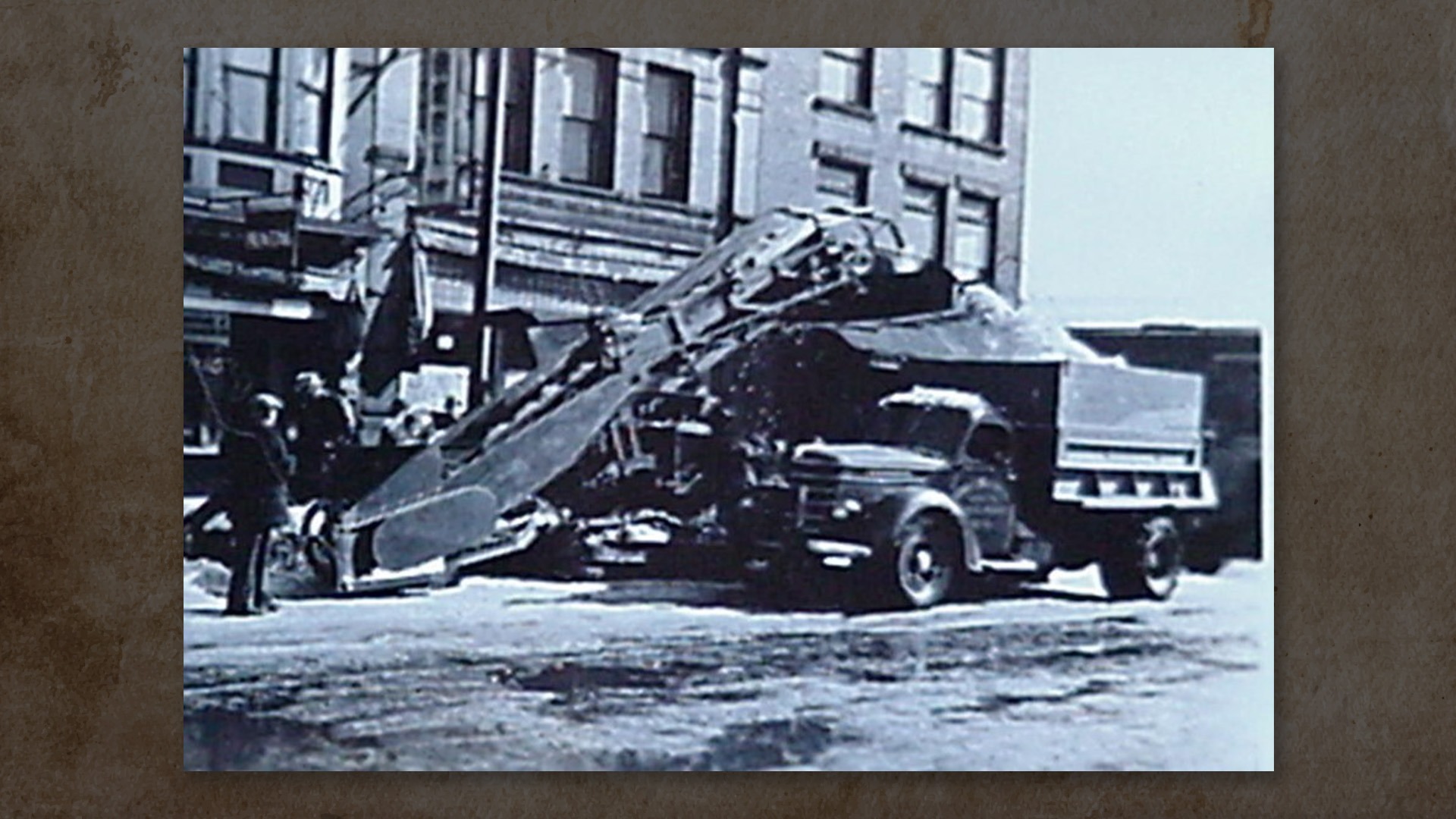
Issue 160 recap: Hanson House meeting, 1799 debt record book, worldwide research requests, and 1947 blizzard photos from Elizabeth.

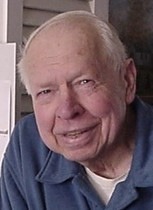 Our longtime friend and Society Treasurer, Bill Frolich, sadly passed away on September 30th 2021. He was 101 years old, a 45-year member of UCHS, and the writer/editor of our Newsletter. Bill and his extraordinary knowledge of Union County history will be greatly missed.