
June Meeting
The June meeting of the Society, originally scheduled for the first day of that month, was held instead on the 22nd, and in Hillside, rather than in the Hanson House. We had taken advantage of an offer to meet at a private museum of mechanical devices once used throughout the twentieth century. Prominent among the exhibits were several early-model automobiles dating back to the 1900s, as well as some more modern. At times music was provided by the Wurlitzer Band Organ from a merry-go-round. There were many Lionel electric trains on display on shelves mounted on the walls, as were miniature gasoline engines, once used in model airplanes or racing cars or motorboats. It was an amazing exhibit of once-familiar items common to most of us through the years. Fortunately, very little business work was needed for the society meeting.
Hillside Visitors
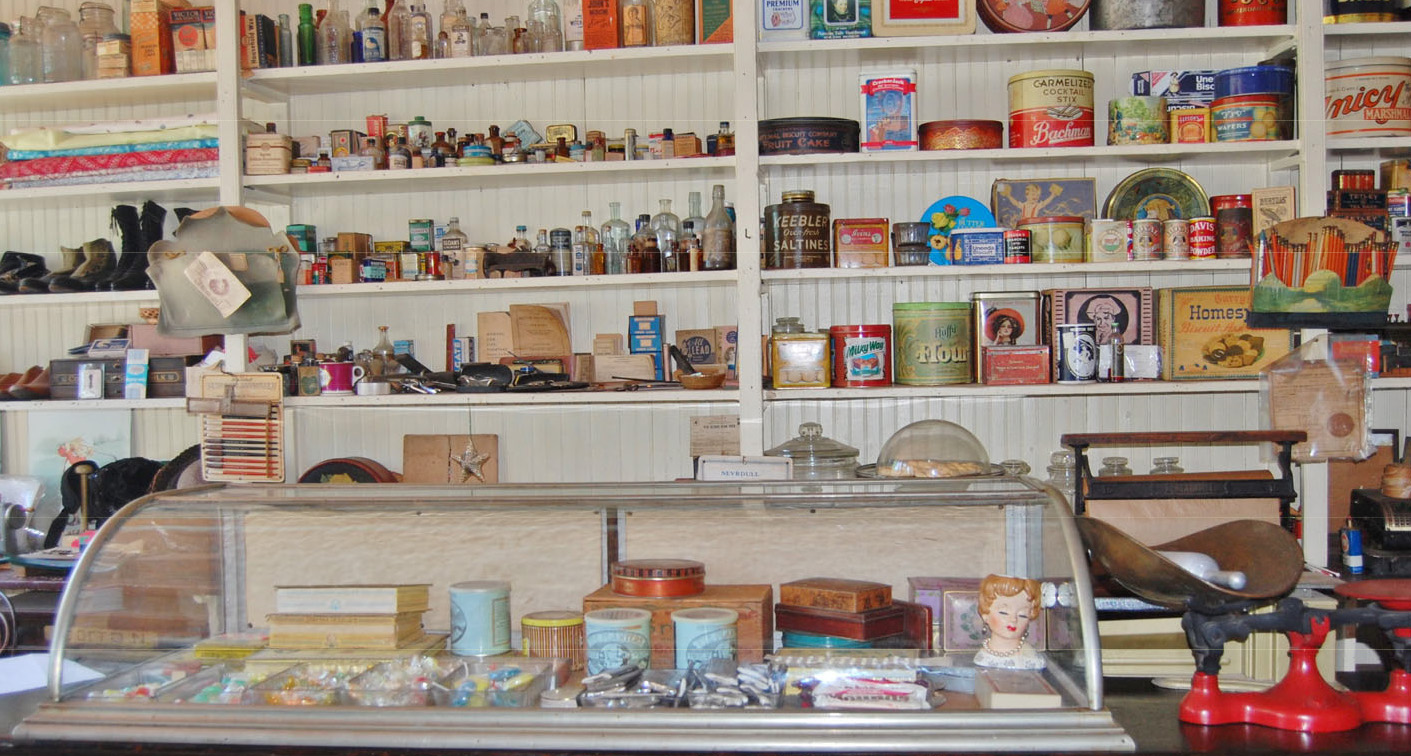
On May 19th the Hillside Historical Society played host to a group of Senior Citizens from New Providence, many of whom were members of the New Providence Historical Society. Although they operate the Salt Box Museum of life in the 1840s, they were impressed with the Woodruff House and Eaton Store Museum, part of which dates back to 1735. Some of the items on display were familiar to a few of the visitors, but there were many questions asked, and easily answered by the docents. The store, stocked as of 1925, brought forth many comments from those visitors who remembered the items from years past. There was no difficulty in explaining who Phil Rizzuto was, and all were amazed at the number of his trophies on display in a special room of a separate part of the museum.
Hillside Fourth Grades
Members of one historical society are often members of other societies as well, and so it is with the Union County society. On the week of June 9-13 several members of both the Union County and Hillside societies acted as docents in the Woodruff House to explain to all of the fourth grade students of the Hillside schools how life was like a century or more ago. The ten classes were spread out two a day in the morning of each day of the week. Most of the students were amazed that life had existed without computers or cell phones, and that a nickel once purchased a whole bag of penny candy, or a single chocolate bar. They were very disappointed to find that the candy in the glass counter of the Eaton Store was only for display and not for sale.
There were a few, perhaps recent arrivals to this country, who were quite familiar with some of the tools and utensils on display in the kitchen of the 1890s period, as their parents had used them in the old country that they had left. The old, cast iron, coal-fired stove was explained in detail as to how it was started each morning, after the ashes from last night’s fire had been shaken down from the fire box, and a new fire set up in its place. The students were surprised to learn that toasted bread could be made on the stove using the ancient wire-framed toaster set upon an opening in the top over the fire-box.
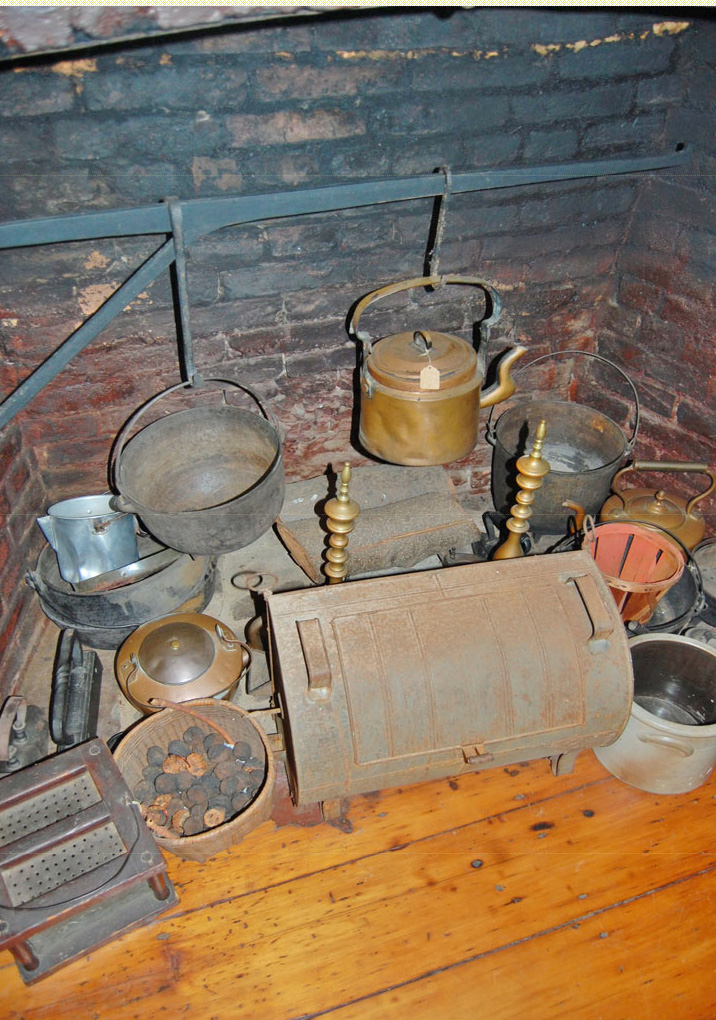
In the middle room everyone learned how food was cooked over an open fire in the fireplace, using kettles suspended from the wrought iron crane mounted in the brick-work. They were shown how a sheet-metal, reflector oven set before a burning wood fire could roast a chunk of meat, much as a modern-day rotisserie does.
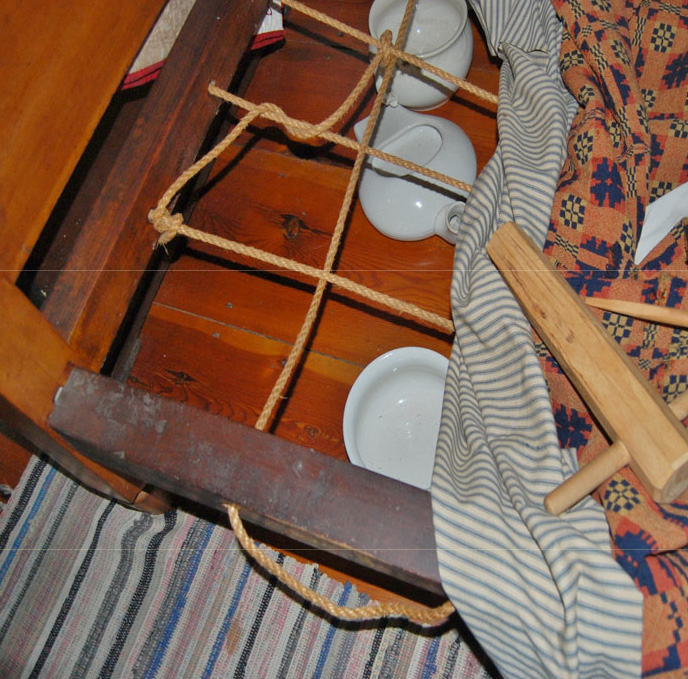
The rope-sprung bed, with its bed wrench that permitted a tired farmer to adjust the ropes and “sleep tight” brought forth considerable comment, as did the chamber pots concealed beneath it. Outdoors, a few students had a chance to try a few strokes of the pitcher pump, and watch the flow of water from a source below ground, but rainy weather prevented most of the classes from using the pump as they remained indoors.
Pictures From Our Files
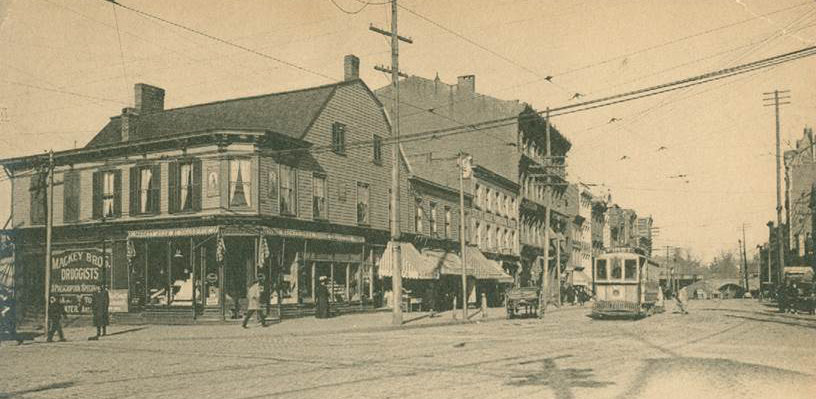
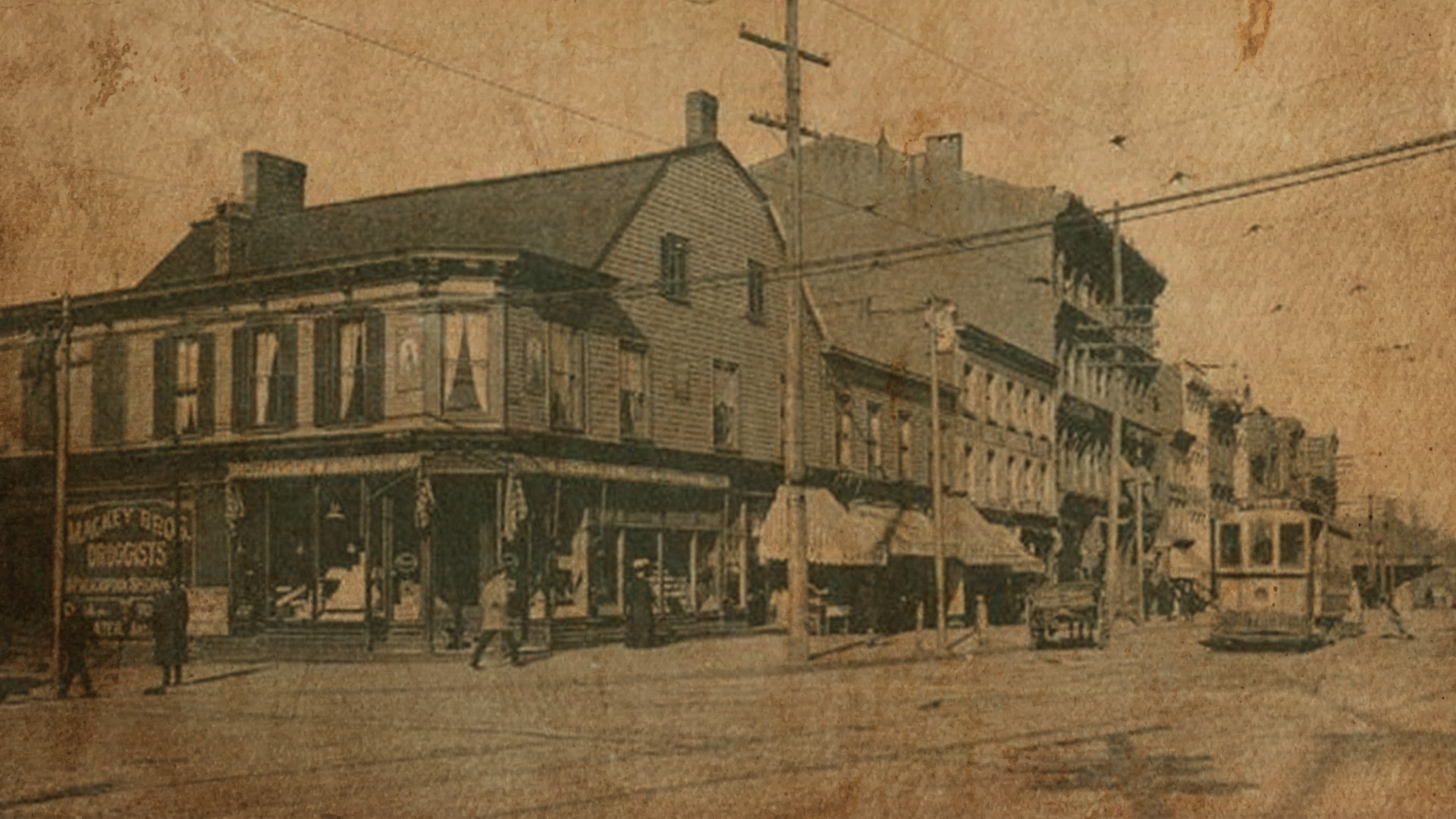
Our featured picture is a view of the intersection of Broad and Jersey in Elizabeth at about 1910. This date is roughly established by some of the objects easily visible in an enlargement of this photo. The famous arches are shown in the background, and they were built around 1900. The electric trolley system is in operation, with a First Street trolley in the foreground, and a second just coming out from under the arch. This trolley system began to replace the horse car also around 1900, but it took time to develop. What may appear to be birds in the sky are actually insulated cross-overs of the trolley wires.
Another clue is the presence of Mackey Brother’s drug store on the northwest corner of the intersection. This building and some others, by 1912 had been replaced instead by Goerke’s Department Store. Barely visible on the right side of the photo is the front of the Hersh Building, (not the tower) directly opposite West Grand Street. Many years later this building was reduced to a two story one, by tearing down the several upper stories. No automobiles appear in the picture, but a horse and wagon are tied to one of the hitching posts at the curb. A fruit and vegetable store is shown in the center of the picture; an unlikely store in today’s business district. The shadows and the many awnings indicate that this photo was taken just before noon on a sunny day.
Over the Back Fence
Dick Koles was recently visited by his daughter, who came all the way from California to stay with her father for a week. Bill Frolich as a Roselle historian, was featured in the literature put out by the Roselle Savings Bank as it celebrated one hundred twenty-five years of existence as a business, the oldest in Roselle.
Frequently Asked Questions
Why was the June 2014 UCHS meeting held in Hillside?
The June meeting was rescheduled and held in Hillside after the Society accepted an offer to meet at a private museum featuring twentieth-century mechanical devices and related exhibits.
What is the Eaton Store Museum and what era does it represent?
The Eaton Store Museum is part of the Hillside museum complex and is stocked to represent a period store experience from about 1925, featuring once-common household and store goods.
What did Hillside fourth graders learn at the Woodruff House?
Students learned how everyday life worked before modern technology, including cooking with coal stoves and fireplaces, using pumps for water, and how household tools and beds functioned.
What is a rope-sprung bed and what does “sleep tight” mean?
A rope-sprung bed used ropes to support the mattress, and a bed wrench was used to tighten those ropes; tightening them helped a person “sleep tight.”
What does the 1910 Broad & Jersey photo reveal about Elizabeth’s trolley era?
The scene shows electric trolleys operating near the famous arches and captures details of downtown commerce and infrastructure around 1910, including trolley wire crossovers and early storefronts.
Related Newsletters
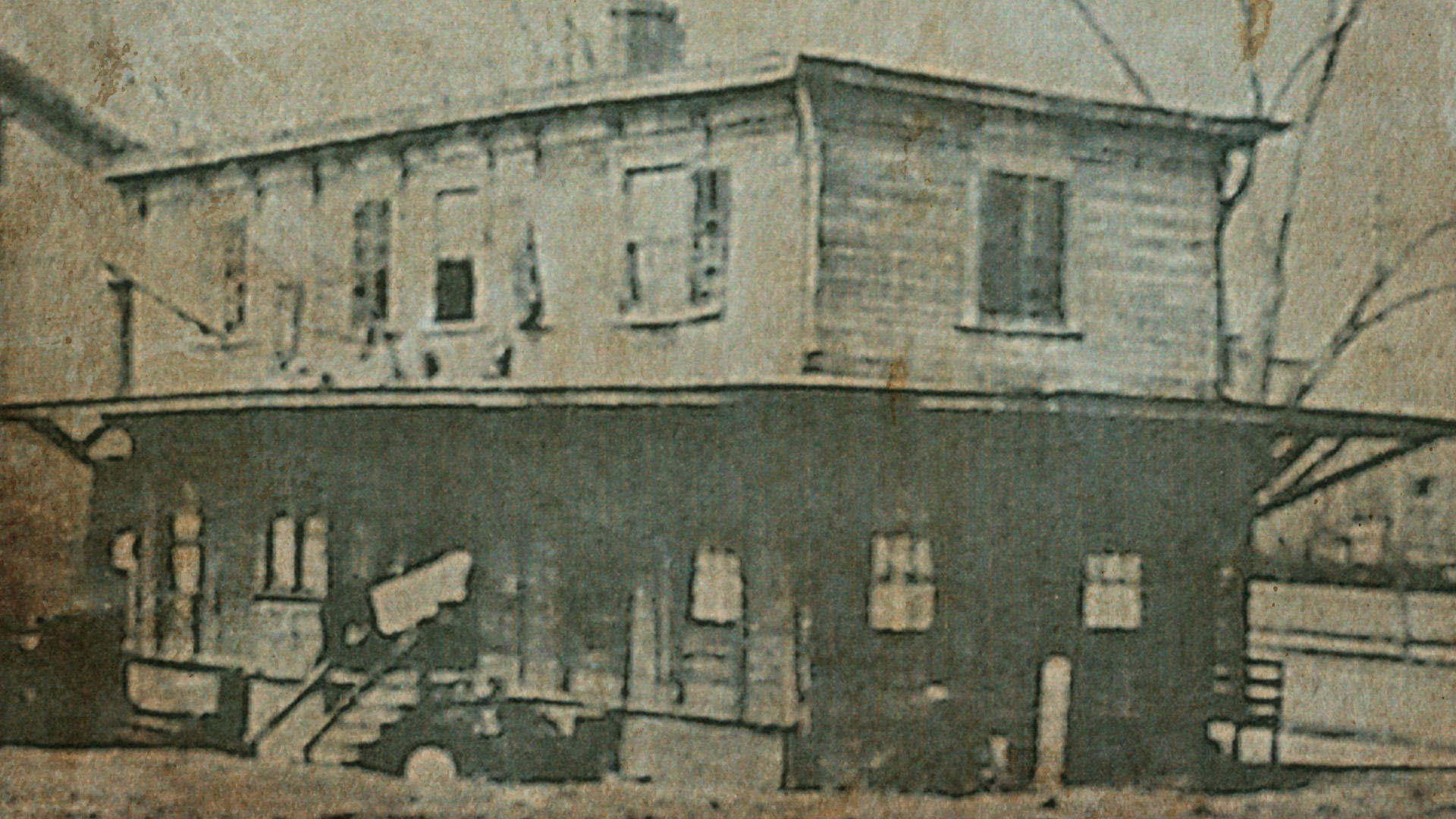
The UCHS marks its 145th anniversary with Medal of Honor history, civic leadership, railroad heritage, and the return of spring in Elizabeth.
Snow cancels a meeting, Peterstown history takes focus, and Ursino Lake’s towering ice house recalls winters in old Elizabeth.

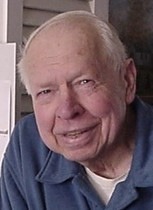 Our longtime friend and Society Treasurer, Bill Frolich, sadly passed away on September 30th 2021. He was 101 years old, a 45-year member of UCHS, and the writer/editor of our Newsletter. Bill and his extraordinary knowledge of Union County history will be greatly missed.