
Society Announcements
It is most unfortunate that the present world health condition has severely curtailed the operations of our society and placed everything on “hold”. We have had no activity and there is nothing to report. Our dinner was postponed to a yet uncertain date, but it will be held. We are not sure about the date of our annual picnic, but we expect to have it, also.
Early Union County History
In the meantime we would like to remind our readers of some early or little-known facts about Union County. One of its oldest roads has been known as Water Street, Elizabeth Avenue, Rahway Avenue, George’s King Highway, Saint George’s Highway, Route 27, and as part of the Lincoln Highway. Its origin pre-dates the English settlement of Elizabethtown, when it was used by the Dutch traders as they traveled between New Amsterdam and the Delaware River. An old branch of this road is Cherry Street, which follows the edge of the river as it comes from Union.
In the good old days any well-developed road was known as a King’s Highway, but after the American Revolution eliminated King George III, the name was changed to Saint George’s Avenue for the patron saint of the English people.
Other bits of early history involve houses, such as the Bonnell House on East Jersey Street, which was built before 1682, and the Belcher-Ogden House just across the street. This house was the home of two governors of New Jersey, Jonathan Belcher, a Royal Governor, and Aaron Ogden, a state governor in 1813. Not very far away is the home of the Hamtons, part of which was built in 1696.
The ink was barely dry on the indenture of agreement between the Indians and the English settlers on October 28, 1664 when some of them began to move into their new purchase. There were plenty of trees for lumber, but they had to be cut by hand in saw-pits. John Ogden established a dam and saw mill on the nearby river at Broad Street in order to ease the work-load. When a new building was built on that site in 1940, parts of the mill’s foundation were discovered there.
In those days any river with enough flow of water soon had a mill next to it. In Elizabeth there were at least three mills on that river, and Trotter’s Mill in Union. There was a mill in Salem, now Hillside, and Crane’s mill in Cranford on the Rahway River, as well as Droescher’s mill further down the stream.
Origins of Town Names
- Elizabeth was named for Lady Elizabeth, the wife of Sir George Carteret, one of the royal proprietors of New Jersey.
- Hillside was so named because of its location on a slight hill.
- Westfield was named as the west fields of Elizabeth.
- Cranford evolved from Crane’s Ford, by his mill.
- Roselle was named for John C. Rose, its organizer.
- Clark was named for Abraham Clark, one of fifty-six signers of the Declaration of Independence.
- Rahway, once known as Spanktowwn, is the English spelling of an Indian word.
- Berkeley Heights is named for Sir John Berkeley, the other royal proprietor of New Jersey.
- Springfield was named for its springs of fresh water.
- New Providence, once known as Turkey, got its name when no one was injured when the ceiling of the church collapsed, just after everyone had left the building.
- Connecticut Farms, now Union, was named for the farmers from that state who moved there.
- Plainfield honored the plain people who lived there.
- Winfield Park was named after a meeting held in the Winfield Scott Hotel in Elizabeth.
Pictures from Our Files
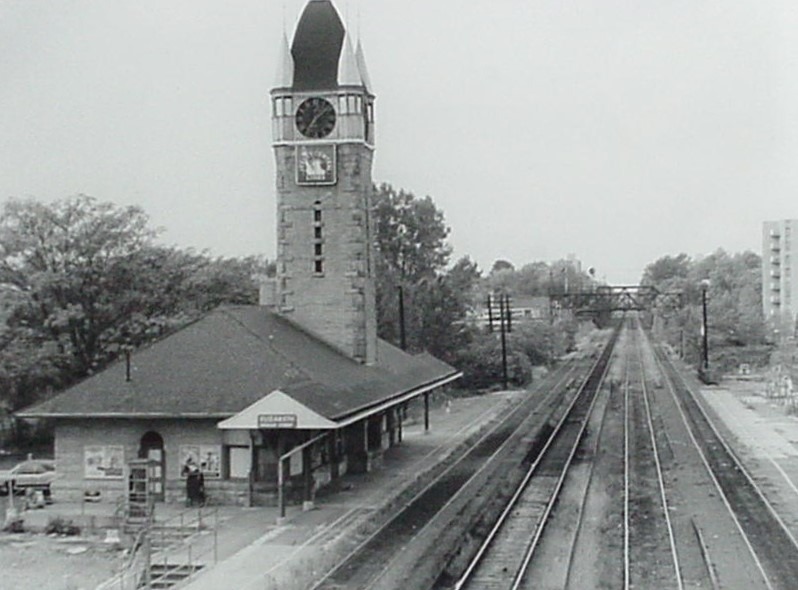
Back in the good old days we used to have steam powered railroad trains that ran through Union County with conveniently located stations along their way. At one time in Elizabeth, before the famous “Arches” were built, there was a union station built between the crossing rails of the Jersey Central and the Pennsylvania Railroads in the middle of the city. This combined station was eliminated when the rails of the Pennsylvania were raised high above the Central when the arches were built in 1900, and separate buildings became necessary.
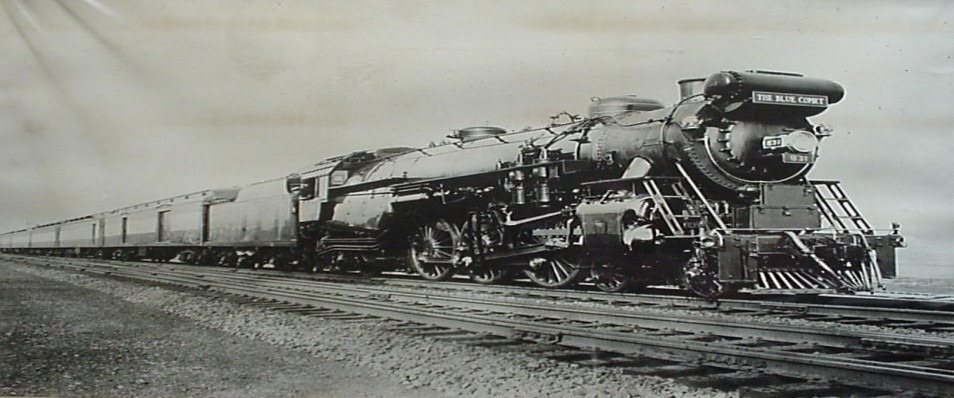
The Central Railroad of New Jersey offered freight and passenger service both east and west, with ferryboats from Jersey City to New York City. Along with its commuter service the railroad provided a few deluxe passenger trains such as “The Blue Comet”, directly to Atlantic City. This train had specially painted blue cars with a broad yellow stripe along their sides.
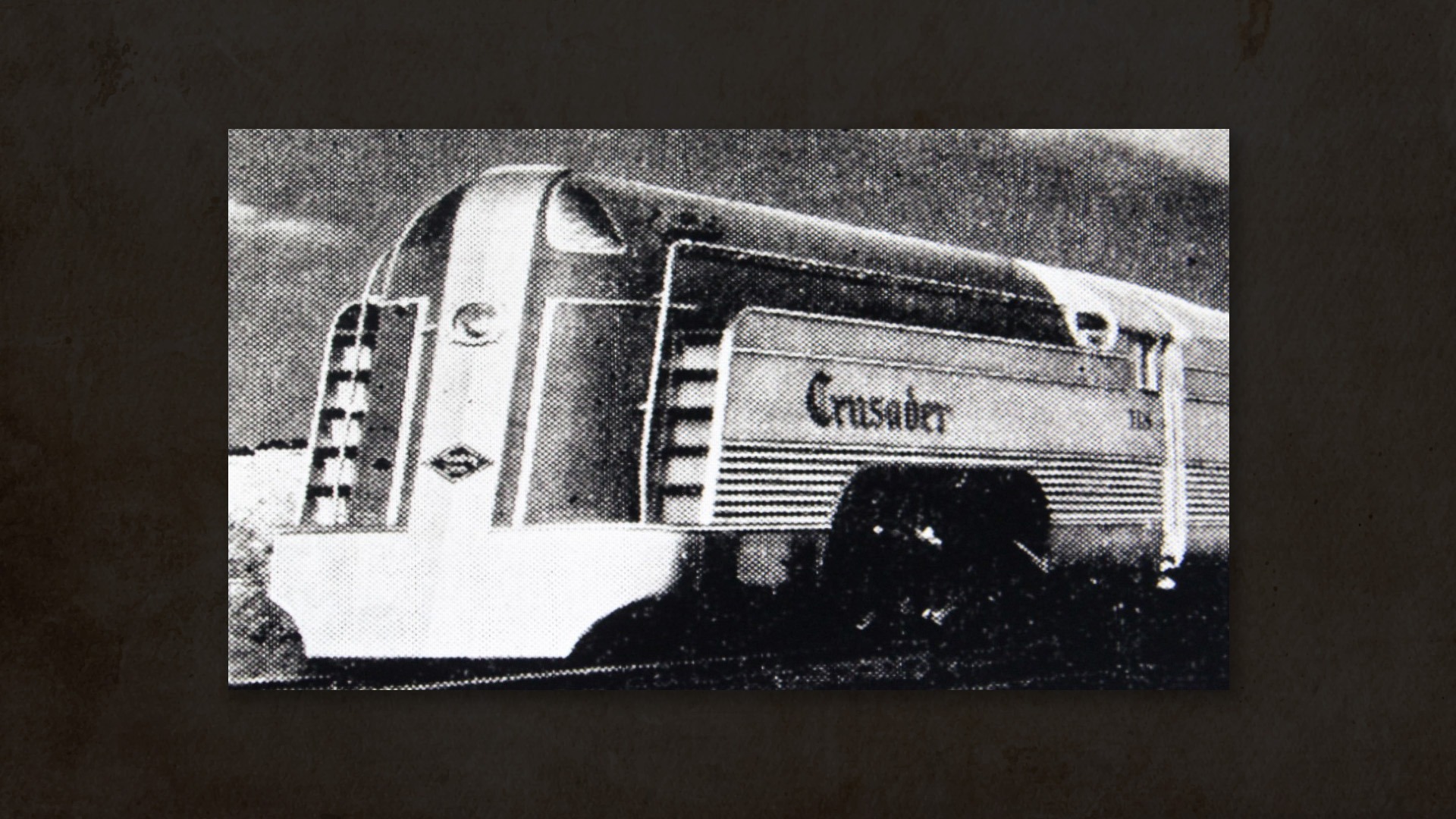
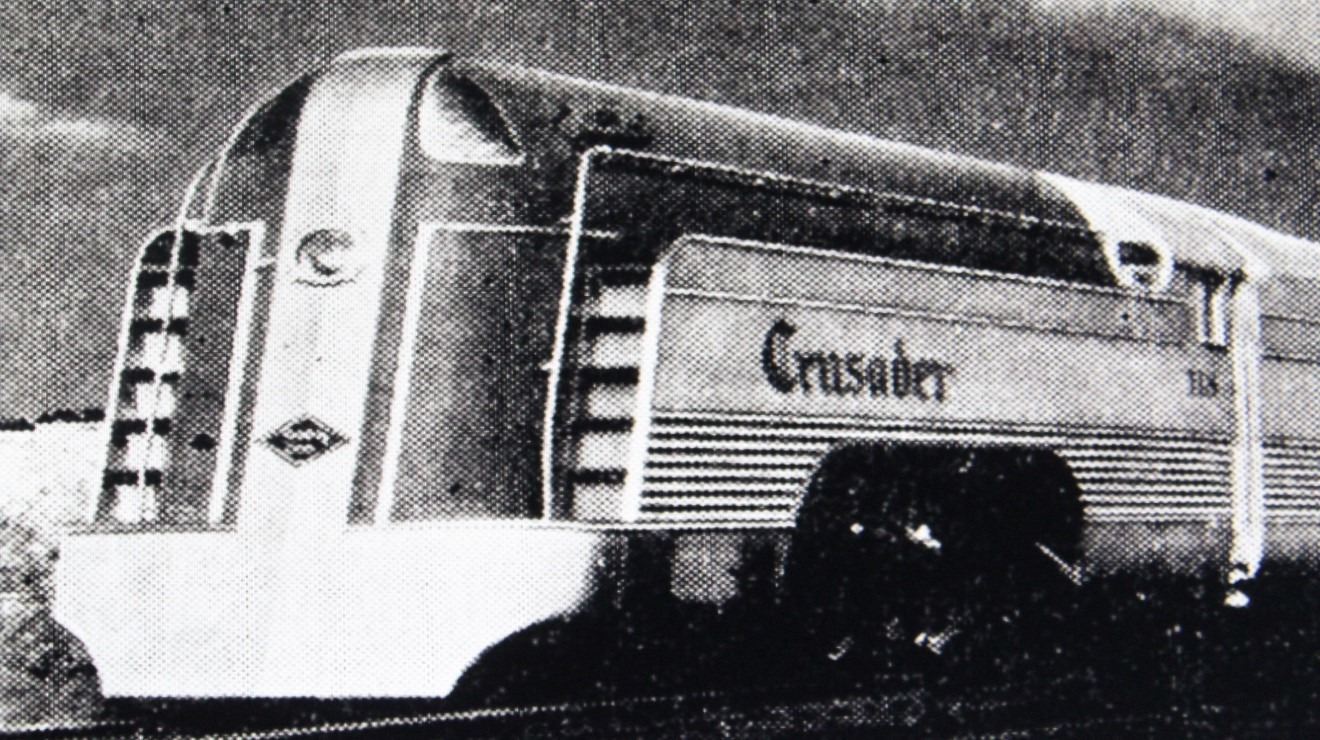
Another train, named the “Crusader”, was pulled by a modified steam locomotive wearing a stainless steel streamlined covering as it passed through Elizabeth. Both trains started their runs from the Jersey Central Terminal in Jersey City, with the Crusader traveling west to Philadelphia, in Pennsylvania.
It was one night around 1968 that an east bound freight train derailed as it was passing through Elizabeth and its flying, bouncing cars crashed into the west bound building and completely destroyed it. The morning commuters were surprised to find that everything had been cleaned up and that there was no trace left of a station. It was never replaced.
A few years later the long canopies of the east side were shortened considerably, as commuter service fell off, because of the “Aldene Plan” where most of the Central’s commuter service was sent to Penn Station, Newark, by way of a new connection to the old Lehigh tracks at Aldene. At Penn Station a person could easily switch to a train that would take him to either up or downtown Manhattan. Eventually the railroad company made arrangements for a few trains to go directly to New York without the need to change trains at Newark.
Over The Back Fence
Our man in Florida says that he has not lost his hair, as he has all of those loose hairs in a little box on his dresser table.
Related Newsletters
Holiday memories, winter sports, ghost stories, and the era of the Model T come together in this nostalgic Union County newsletter.
A collection of “Did You Know?” moments from Union County history, exploring Elizabeth’s waterfront, transit, industry, and everyday memories.
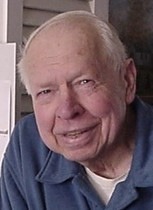 Our longtime friend and Society Treasurer, Bill Frolich, sadly passed away on September 30th 2021. He was 101 years old, a 45-year member of UCHS, and the writer/editor of our Newsletter. Bill and his extraordinary knowledge of Union County history will be greatly missed.