
March 1 Meeting
The meeting of March 1 was held as scheduled in the Hanson House, with our own president, Joanne Rajoppi,
as the speaker of the afternoon. Her topic was the fight for Woman Suffrage in the early years of the
twentieth century and the adoption of the 19th Amendment of the United States Constitution in 1920.
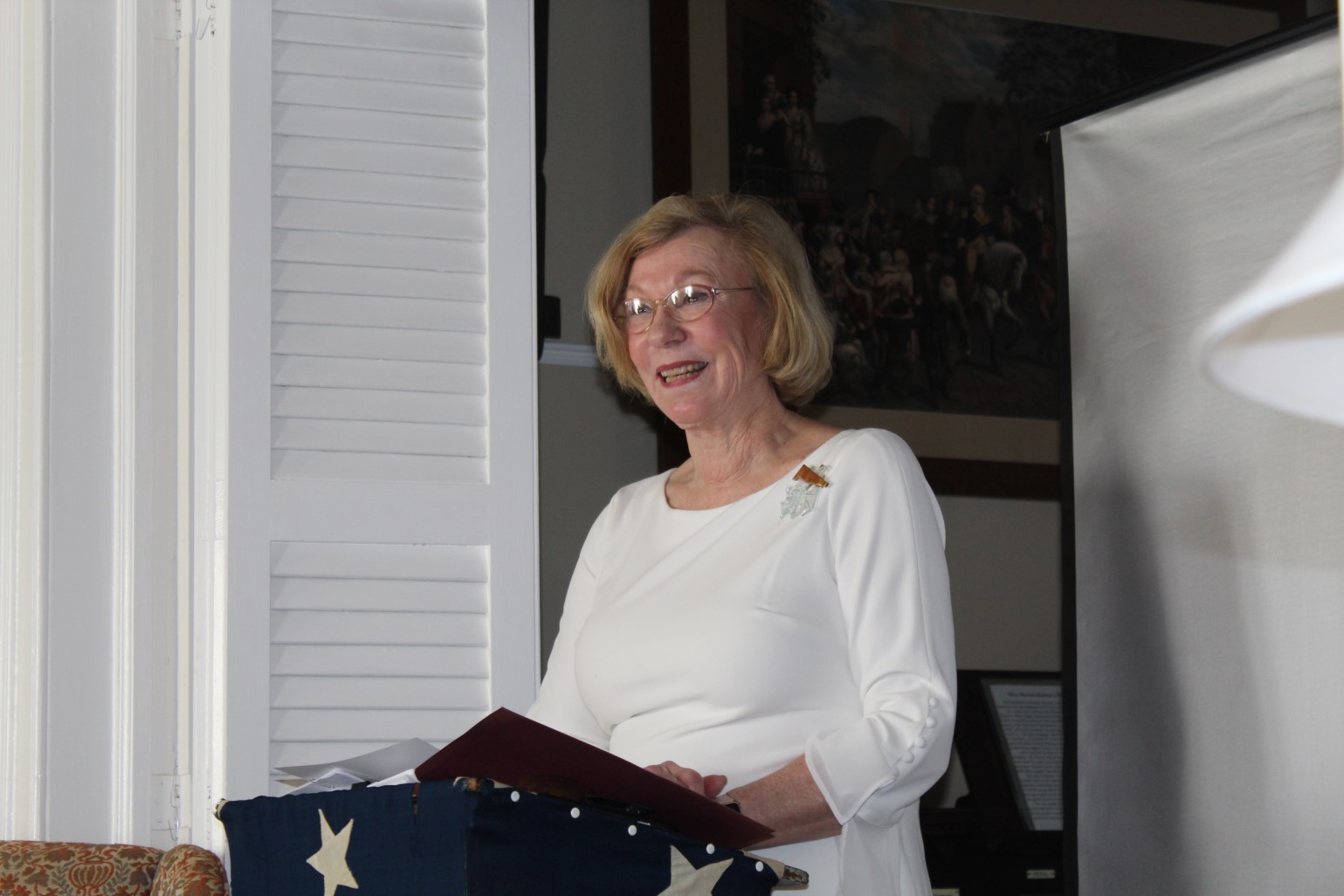
Among the many listeners were the woman mayors of three towns of Union County. They were introduced as
Mayor Margaret McManus of Winfield, Mayor Sara Todisco of Garwood, and Mayor Linda Karlovitch of Kenilworth.
All of these ladies were specially invited guests of the society.

Using a slide projector, Rajoppi presented a detailed history of women activists, going back as far as
Hannah Arnett, of Elizabeth during Washington’s retreat of 1776 across New Jersey during the American
Revolution. She told us of the activities of many other women, such as Fanny Bates, Mary Alward, Nina
Allender, Alice Paul, and Florence Dwyer. Refreshments were served by the ladies of the society at the
conclusion of the meeting.
May Meeting
The meeting of May 3 is to be held in the Hanson House as our annual award meeting where several students
of Union County high schools are presented with history books and financial awards in recognition of their
academic achievements.
These awards are of a competitive nature, as any interested student must submit a written application to
the selection committee that states the person’s qualifications and interest in History. It is the committee’s
duty to read and judge the letters on their quality of expression and genuine interest in history.
There are no conditions attached to these awards; the recipients are free to use them as they see fit.
However it is hoped that the awards will stimulate an interest in local history.
The books mentioned are both published by the society, and were written by Jean-Rae Turner, a member of the
society, and by Valentine Fallon of the Elizabeth Daily Journal. Both are re-prints of the newspaper articles
about the history and former life in Old Elizabeth, New Jersey.
Pictures From Our Files
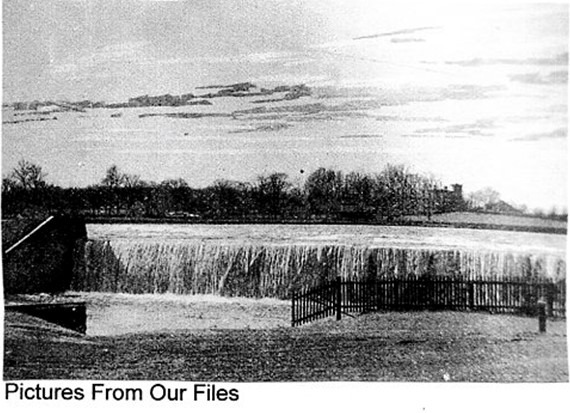
Here is a picture of the stone dam that created Ursino Lake, one a part of the Elizabeth River. A gate at
one end of the dam could be used to control the amount of water in the lake. Built to make a reservoir for
the water company for Elizabeth, the lake was in existence for many years until finally filled in as a part
of the Elizabeth River Parkway.
Long before that time, the river had other uses, and Col. Trotter had a mill at its edge by North Avenue in
Union. An early road to the mill followed the downstream course of the river, and that road is still named
“Trotter’s Lane”. The miller’s house still stands close to where the mill once stood.

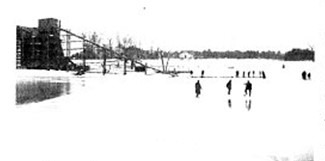
In the cold winter months the lake used to provide ice for home ice boxes of the many customers of the ice
company, before the invention of home refrigerators. The ice was sawn from the frozen surface of the lake
and stored in a large, five story ice house at the edge of the lake.
In the warm summer months the lake was the home of many tadpoles and frogs, whose croaking could be heard
throughout the area. Tropical fish owners used to net live daphnia from the water’s edge, as prized food for
their many varieties of exotic fish.
In the late 1930s the thickly frozen surface of the lake became the scene of thousands of ice skaters on
evenings and weekends, with plenty of room for everyone.
There were times in the summer months that the gate was opened, letting all of the water to drain from the
lake, with only the river water flowing through the two channels. As the lake-bed dried its broad, muddy
surface hardened and cracked into thousands of small pieces somewhat like a jigsaw puzzle. It remained so
for weeks, until the gate was closed and the lake was again re-filled.
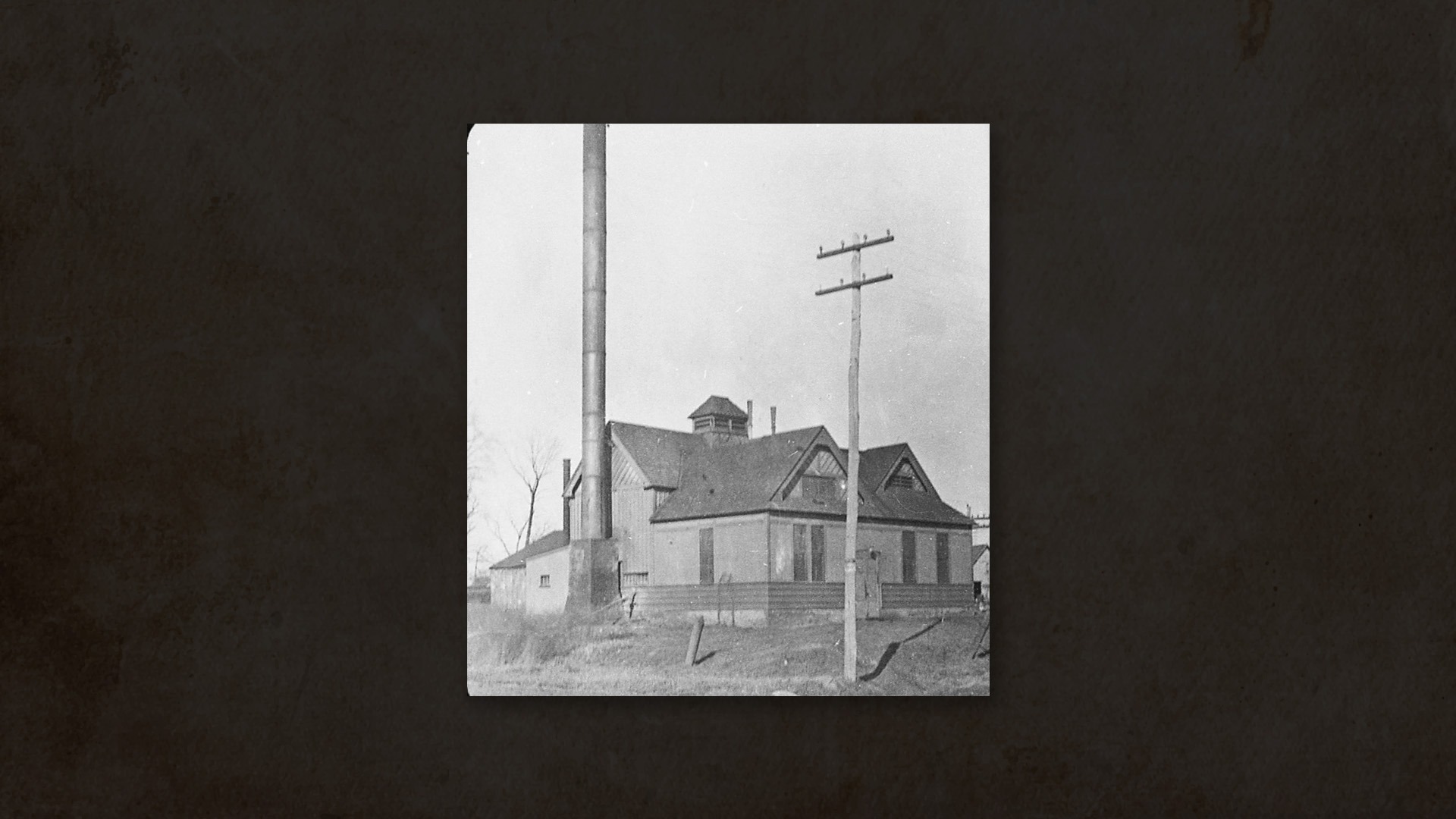
A short distance from the gate was a pumping station, with two very large concrete walled filtration tanks,
where the water was cleaned before it was pumped through an underground pipe-line into the Irvington Avenue
reservoir, for distribution throughout the city.
Many years ago a small, red brick house stood at the east end of the dam. This was the gate-keeper’s home
where he lived with his family. However, in 1928 changes took place at the dam. The gate-keeper was gone,
the house was demolished, and a new flood-gate was built. The stone wall of the dam was reinforced with a
massive, poured concrete casting that eliminated the straight drop of the water. The deep water at the edge
of the wall was gone and swimming was reduced to just wading. The old wooden-planked bridge was also
replaced with a new reinforced concrete structure.
Shortly after this water was no longer used for drinking, the Irvington Avenue reservoir was drained and
later the luxury apartment complex known as Pierce Manor was built in this old lake-bed, with automobile
parking in the first level.
Around 1939 a very severe summer thunder storm caused heavy flooding in this area, and water from the old
Ursino Lake and pumping station poured through the forgotten pipe-line drowning all of the cars parked in the
garages with at least four feet of water. The water was soon drained back into the nearby river, and the
pipe-line was now eliminated, but the damage was done.
Over The Back Fence
Ethan in Florida wants to know what happens to all of those daylight hours we have been saving.
Do we have to give them back in November?
Frequently Asked Questions
What was the topic of the March 1 meeting at the Hanson House?
The program focused on Woman Suffrage and the adoption of the 19th Amendment in 1920, presented by Joanne Rajoppi.
What was Ursino Lake and how was it used?
Ursino Lake was a reservoir area along the Elizabeth River. It was used historically for water infrastructure,
winter ice harvesting, and recreation such as skating in the late 1930s.
Where does the name “Trotter’s Lane” come from?
The road followed an early route to Col. Trotter’s mill by the river, and the name remains in use today.
Related Newsletters
Holiday memories, winter sports, ghost stories, and the era of the Model T come together in this nostalgic Union County newsletter.
A collection of “Did You Know?” moments from Union County history, exploring Elizabeth’s waterfront, transit, industry, and everyday memories.

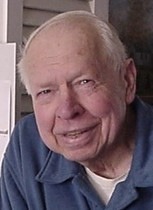 Our longtime friend and Society Treasurer, Bill Frolich, sadly passed away on September 30th 2021. He was 101 years old, a 45-year member of UCHS, and the writer/editor of our Newsletter. Bill and his extraordinary knowledge of Union County history will be greatly missed.