
Civil War Exhibit
Well, it seems as though the American Civil War may have finally ended—again. The four-year exhibit in the one-hundred-ten year old Union County Court House that featured items from that war loaned by individuals and historical societies has been dismantled, and those items returned to their donors.
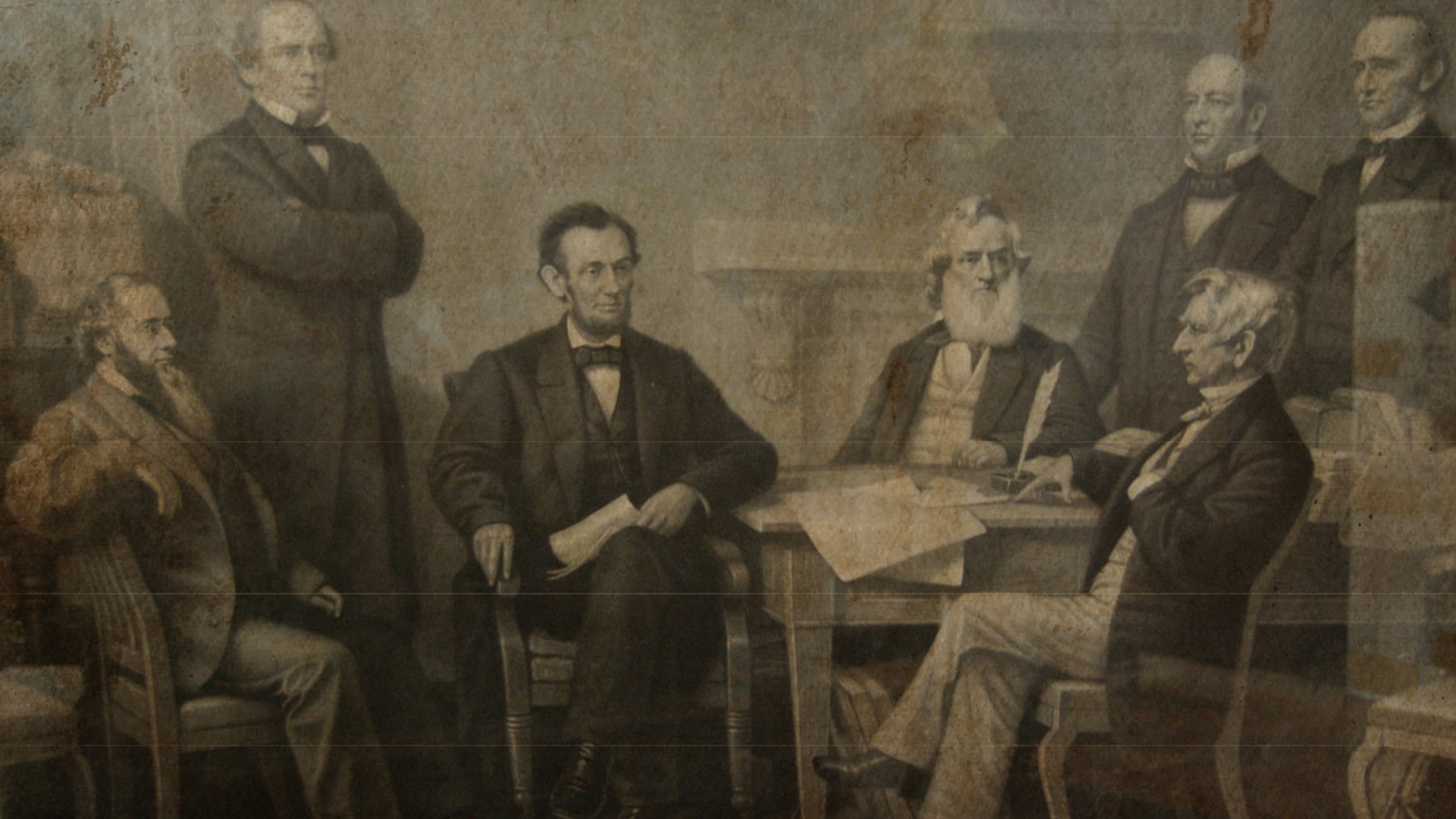
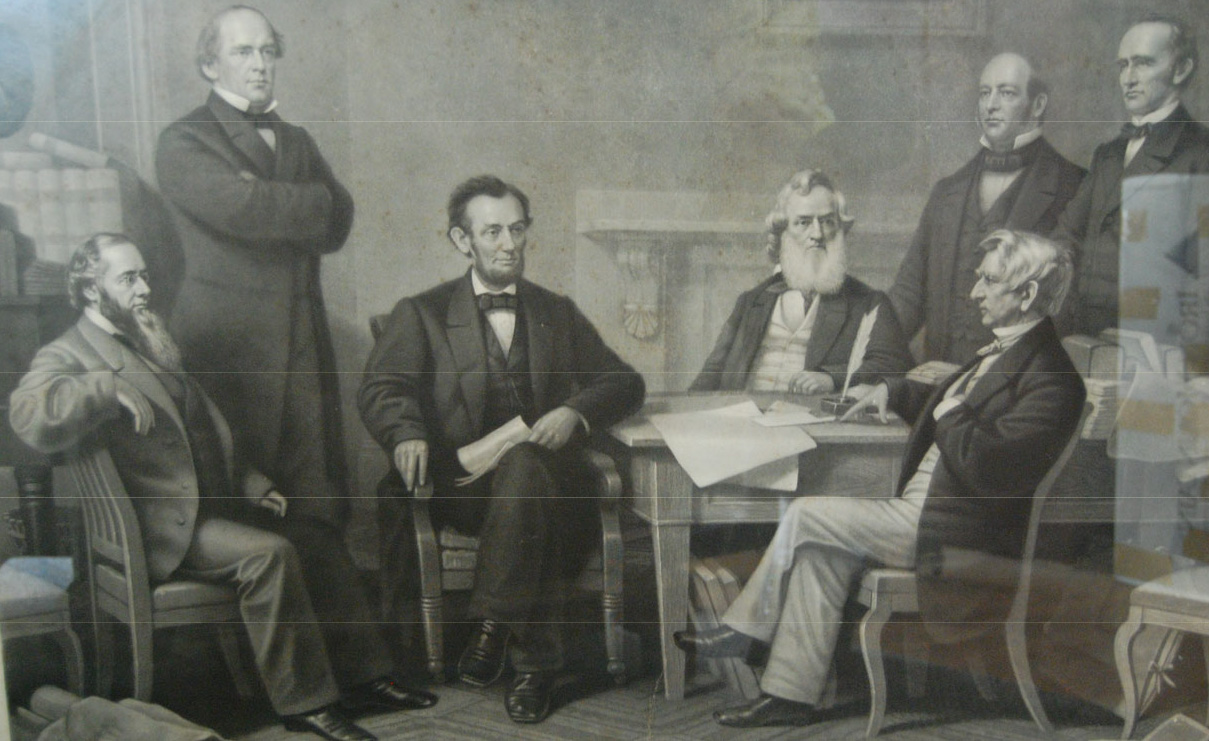
This display, seen by most everyone who entered the main building, was in recognition of the one-hundred-fiftieth anniversary of the conflict that began in 1861 and ended with General Lee’s surrender at Appomattox Court house in April of 1865. The Union County Historical Society was able to provide a few of the items of the exhibit, including a large, framed etching showing the president, Abraham Lincoln, presenting his Emancipation Proclamation to his cabinet. This decree, drawn up after the Federal victory at Antietam in September of 1862, took effect on January 1, 1863, ending slavery in most of the states.
Executive Board Meeting
On August 23rd the meeting of the Executive Board took place in the Hanson House, where plans for the coming year of 2016 were made, as well as plans for our annual picnic, which will be held on September 13, of this year. This was a change of location to the Hanson House from the last several annual meetings, where we had met at the home of Alice Holzapfel. That place is no longer available, as she has sold the house and moved to Saratoga Springs, in New York State.
A slate of officers for 2016 was established, and will be introduced at our September meeting for the election at the October meeting in the Hanson House. The picnic will be held rain or shine, either in the back yard of the Hanson House, or moved inside, if necessary. The society will provide the hot dogs and hamburgers, and the members are asked to bring other picnic-type food for everyone’s enjoyment. The picnic will start at 2 pm and last throughout the afternoon. If possible, please bring a folding chair, as our available seating is limited.
Requests for Information
Although the society is not a genealogical one, we do on occasion get a request for information about an ancestor or a family who once lived in this area. Our latest request concerned a member of a Clark Family of the mid-1700s. Our records seem to indicate that Richard Clark came to Elizabeth in the late 1600s, and established a long line of descendants, including Abraham the signer of the Declaration of Independence.
The young lady with the question made an appointment, and we met her at the Hanson House, where we were able to provide her with a modest amount of information about the Clark and Miller families of Westfield. We also gave her a Family Tree of Richard Clark, who came to Elizabeth in the late 1600s, and of his numerous descendants. She was given added information about other local sources of information, such as historical societies and the S.A.R..
Pictures From Our Files
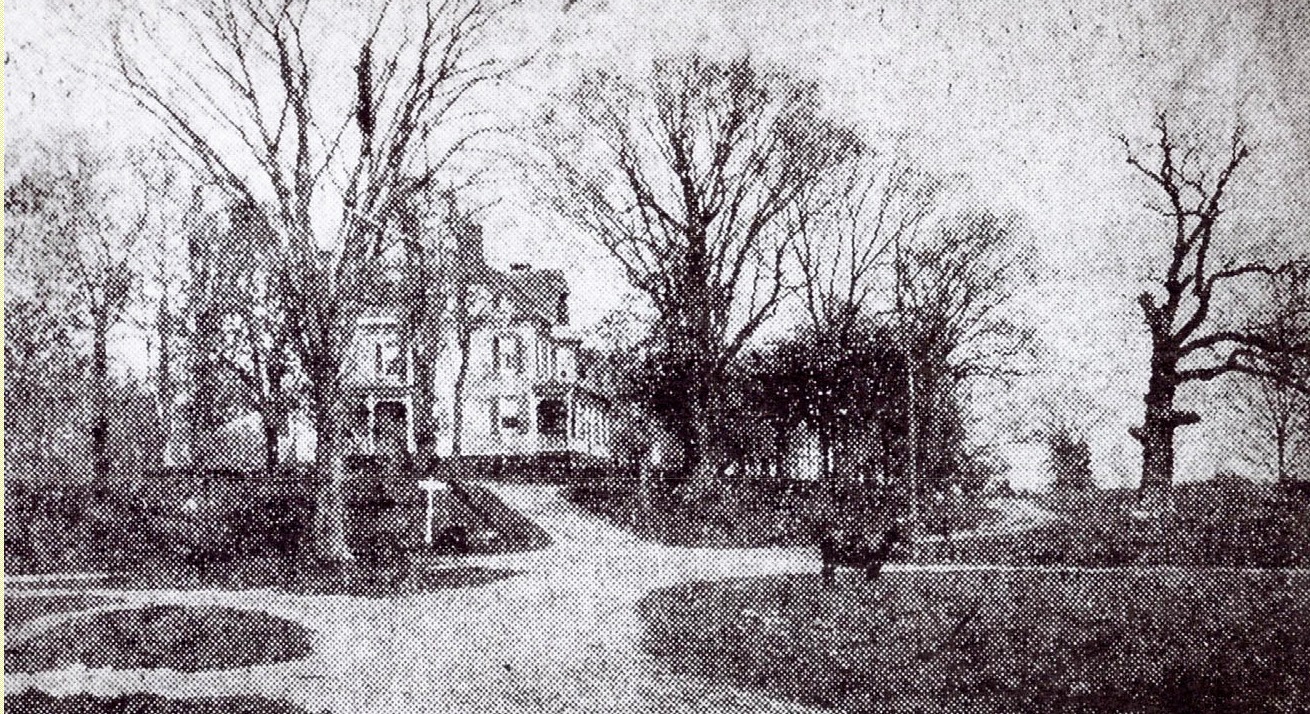
Here is a picture of a house that dates back to the 1780s and the American Revolution. It still stands on the north side of the old road to Westfield in Elizabeth, but close to the present border of Roselle Park, slightly east of Galloping Hill Road. Not far away is the monument that marks the route the invading British and Hessian soldiers took on their way to the Battle of Connecticut Farms, June 7, 1780. The bronze tablet also recalls that a skirmish took place there, and at least one American soldier was killed by the invaders.
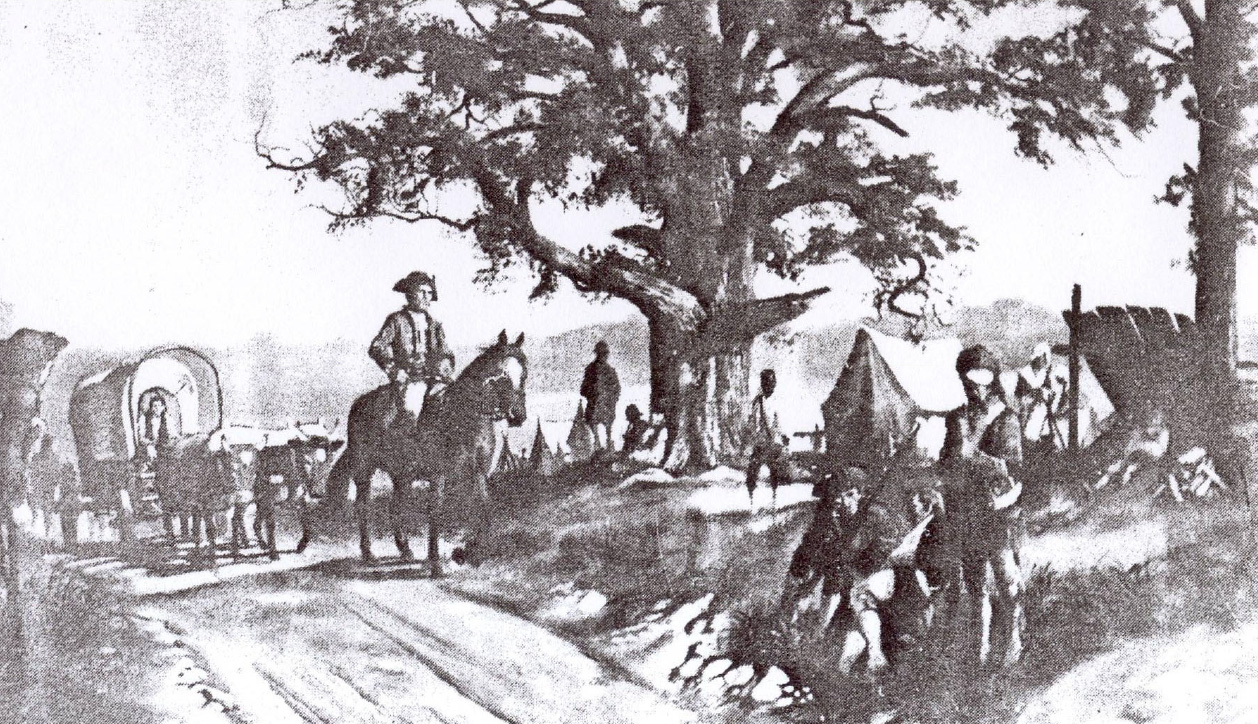
The grounds of the house were used as a hospital, and some of the soldiers rested across the road beneath an oak tree and drew water from the well nearby. In this picture the road near the bottom is Galloping Hill Road, and the narrow road near the front of the house is the old unpaved road to Westfield, now known as Colonial Road. A question remains. Oak trees can live more than three hundred years, so is the tree to the right of the picture the one that shaded the soldiers in 1780? It is known that the tree existed in 1902, but was gone by 1912. If this is the tree, so, where exactly was the well? Does it still exist? That is a possibility.
In the days before city water was available, almost every house had its own well. A circular hole would be dug in the ground about thirty feet deep, and lined with stones or bricks, not cemented together so that ground water could pass through into the well. Wells no longer needed were rarely completely destroyed, but instead were simply filled in with whatever was on hand, and covered with dirt and grass. The stone lining would still remain. Is this what happened to the well of 1780?
Donations
Every now and then we get an offer of donation of some historical artifact that we might be interested in adding to our collection. A recent offer came from as far west as Colorado, concerning a small pill box from a drugstore once well-known on Broad Street in Elizabeth, New Jersey. Some of our older members remembered doing business with that drugstore, named “Oliver & Drake”. We found it listed in some of our directories as before 1900. We were happy to accept this donation, and it arrived in due time. It is a small, round box 1 7/16 inch in diameter by 1½ inch thick, and will be added to our collection of local artifacts. We sincerely thank the donor.
Over the Back Fence
Although Alice Holzapfel has moved to New York State she says that she will drop in on us once in a while. We do certainly hope so.
Charles Shallcross’s large collection of old post cards has been a great help in some of our research.
Closer scrutiny of the photo of the mysterious cave in the hummocks has shown that someone added a line from Dante’s Inferno to the mouth of the cave with, “Leave off hope all ye who enter here”.
Frequently Asked Questions
What was the Civil War exhibit at the Union County Courthouse?
It was a multi-year display recognizing the 150th anniversary of the Civil War, featuring loaned artifacts from individuals and historical societies, including items provided by UCHS.
What does the Lincoln cabinet etching depict?
The etching shows President Abraham Lincoln presenting the Emancipation Proclamation to his cabinet, a decree that took effect January 1, 1863.
Where is the Revolutionary War-era house discussed in this issue?
The house stands near the old road to Westfield (now Colonial Road) in Elizabeth, close to the Roselle Park border and slightly east of Galloping Hill Road, near the 1780 Battle of Connecticut Farms route.
What was Oliver & Drake in Elizabeth, New Jersey?
Oliver & Drake was a drugstore once known on Broad Street in Elizabeth; a pill box from the store was donated to UCHS as a local historical artifact.
Related Newsletters
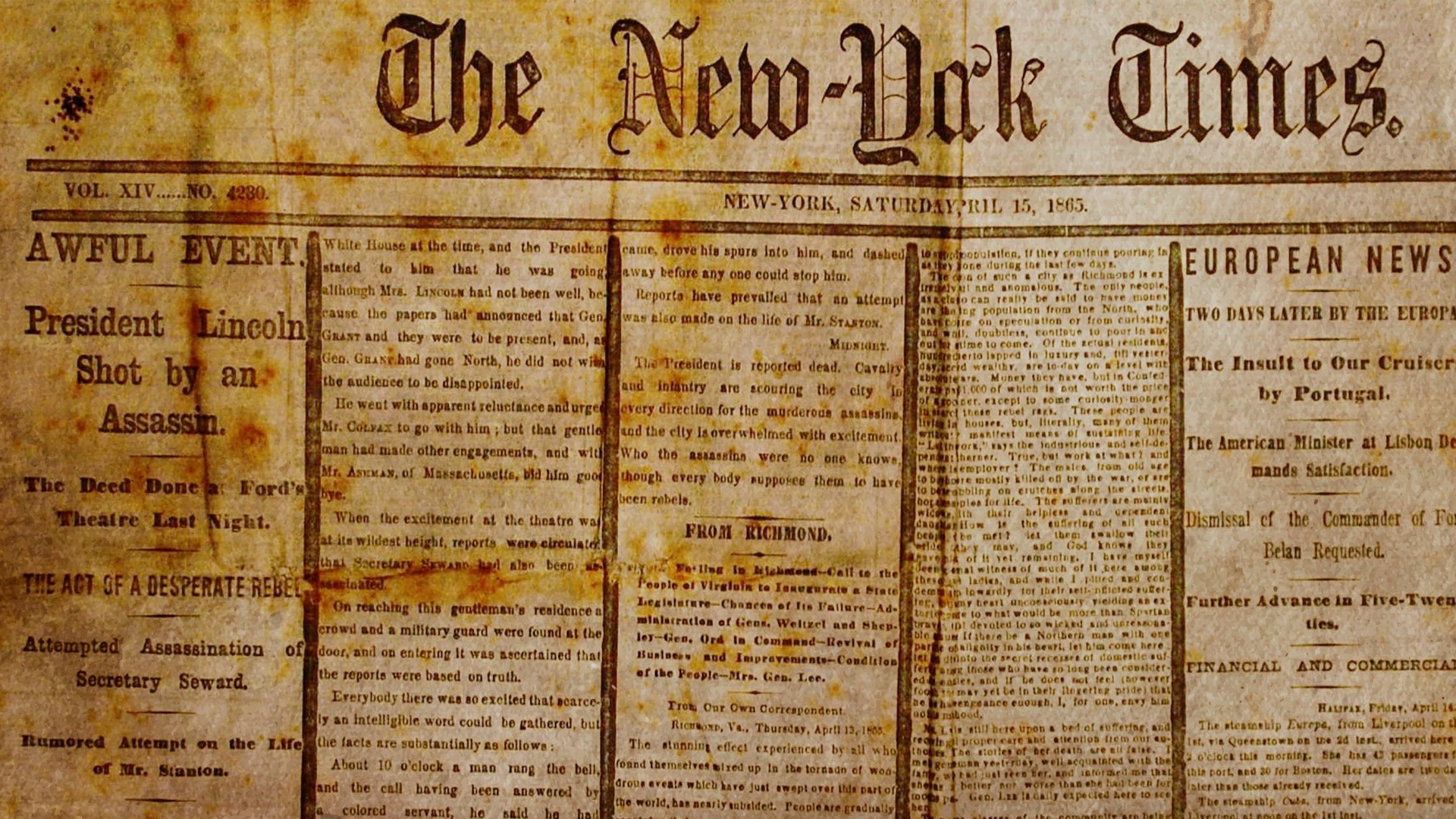
UCHS marks 146 years with an anniversary dinner, explores Lincoln assassination history, and honors longtime member Dick Koles.
Civil War songs, winter storms, War of 1812 notes, a tribute to Dr. Fridlington, and Roselle’s early outdoor movie screenings.



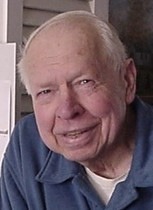 Our longtime friend and Society Treasurer, Bill Frolich, sadly passed away on September 30th 2021. He was 101 years old, a 45-year member of UCHS, and the writer/editor of our Newsletter. Bill and his extraordinary knowledge of Union County history will be greatly missed.