
About The Society
This current virus CV19 has certainly severely curtailed the activities of the Society. Most of our planned events have had to be postponed to an uncertain date or completely cancelled. With nothing newsworthy to report, it was decided to look at some of the past membership of the Society.
According to a list of 1932 in our files there were at least one hundred thirty members, including many prominent residents of Union County. There was Miss Mary Alward, the first woman lawyer in the county. Her very extensive research of the First Presbyterian Church of Elizabeth, a report given at a meeting of the Society on October 12, 1932, is in our files. The Crane family is well represented by four members, and Warren Dix is listed as living at 1046 East Jersey Street, in the Belcher-Ogden Mansion.
Edward Grassman, who helped restore Old St. John’s Parsonage is listed, as is Arthur L. Johnson, who has a school named for him. Callahan J. McCarthy is listed, and as a member, his research of the use of three unofficial seals of the County of Union inspired the Board of Freeholders to adopt the Hannah Caldwell seal as the official seal of the County. This is the only county seal in the entire United States that depicts a murder. The Ogden Family, which traces its history back to the earliest days of Elizabeth, is well represented with three branches of that family listed in the file. C. Godfrey Poggi and his wife are listed. He was a well-known architect, whose many buildings still stand in the county. Among them is the Chapel in the Evergreen Cemetery, on the Elizabeth/Hillside border. These are only a few of the more prominent names listed as former members of the Union County Historical Society. With such a background, it is easy to see why it has survived for over one hundred fifty years.
Thoughts of Easter
Spring has sprung, and now the early flowers have appeared in our gardens, even though some may have had to poke their way through a blanket of snow. Even so, it is still Spring, and time to celebrate Easter. One form of celebrating is with the traditional Easter Eggs, those hard-boiled beautifully decorated eggs colored by the Easter Bunny.
He and his helpers have been busy in the family kitchens, boiling and dyeing the several dozens of eggs supplied by the chickens. On Easter Morning, while the family is in Church, that rabbit will see to it that all of those eggs are carefully, but not too secretly hidden in the area around the house and gardens. He must keep an accurate count and location of these hiding places, or perhaps the last one or two eggs may never be found.
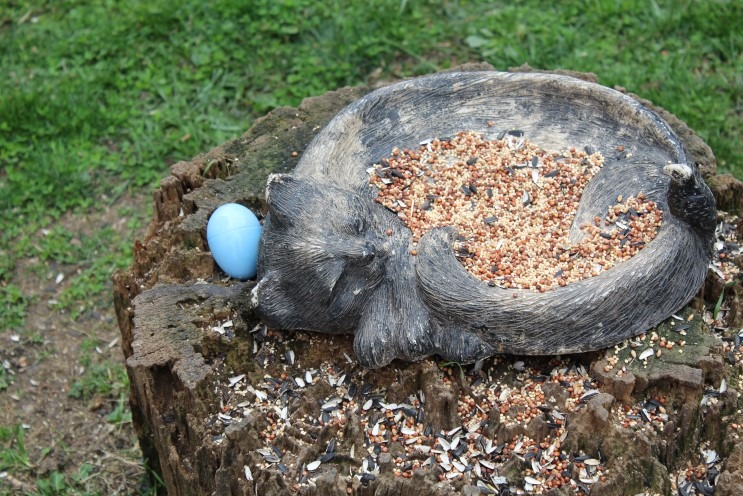
The searchers for these eggs are, of course, all of the young children of the family. Properly equipped with baskets, they dash madly around the area, and soon have several eggs in their baskets, but a count shows that there are still more to be found. The search continues and more eggs are found but there are more still hidden. Eventually the grown-ups have to add to the hunt and finally the last egg is found. Hurrah!


Pictures From Our Files
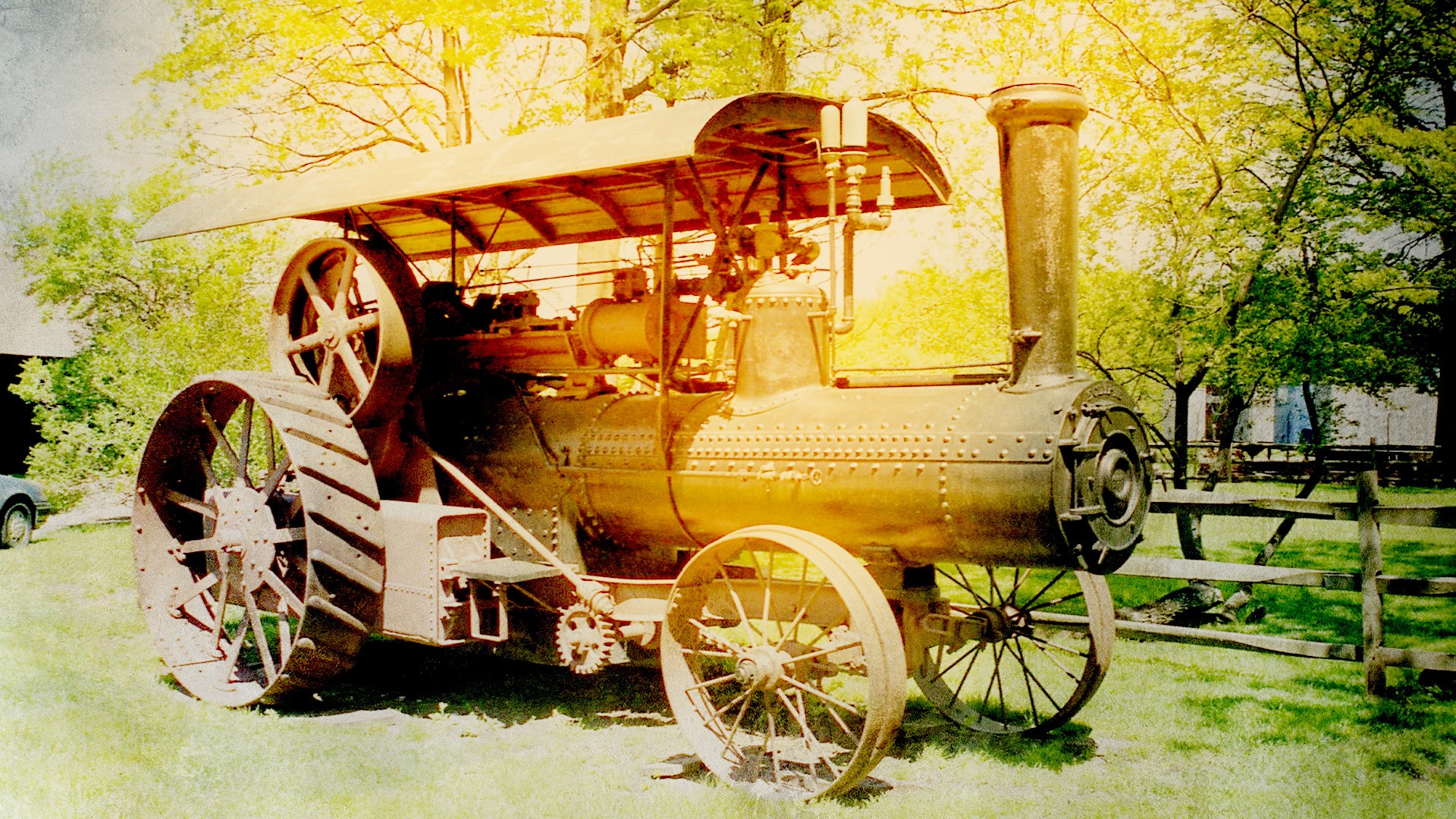
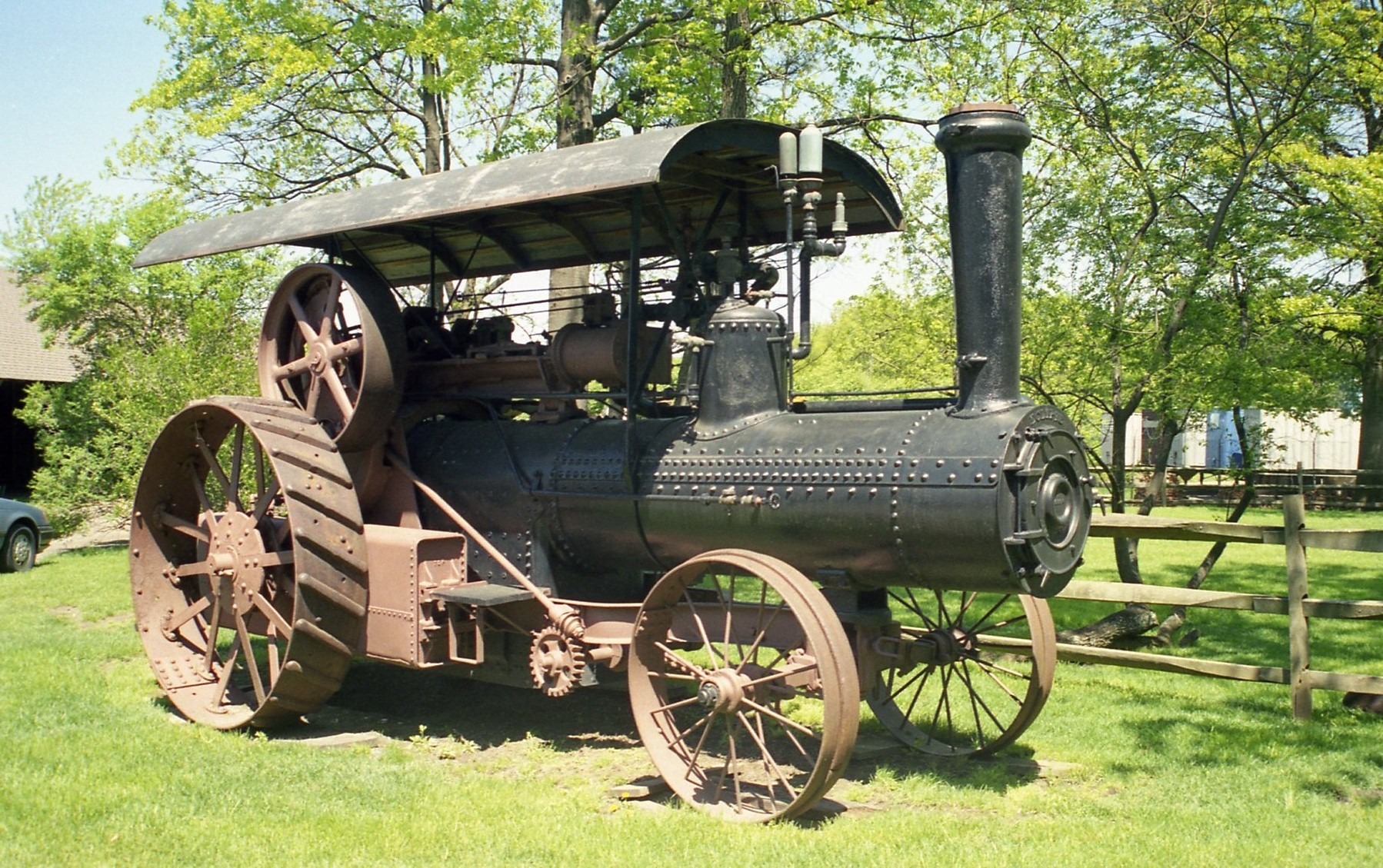
It has been more than two hundred fifty years since Jimmy Watt saw steam lift up the lid of his mother’s kettle and began to understand the power of steam. Since that time stationary steam engines have been used to pump water from mines and drive steamboats up river. The addition of wheels made the creation of railroads possible. Other uses brought about the fire engine with its big red and brass pump, the road-paving steam roller, and the farmer’s friend, the steam tractor, such as is pictured above.
A tractor could do the work of teams of horses by pulling attached plows, cutter bars, hay rakes, fertilizer wagons and other farm equipment. It did not have to be fed like the horses, but unlike the horses, it did not provide any fertilizer. A steam tractor was a self-contained vehicle with a coal box on its rear and a fire-box and boiler in front of the driver. Its two large driving wheels were studded with cleats to better grip the earth and prevent slipping. There was nothing fantastic about the steering. It had a simple worm and wormwheel arrangement which, when turned by the driver, actuated the entire front wheel assembly, thus moving the tractor to the left or right. A sheet metal roof provided some protection from the sun and weather.
Farm Equipment
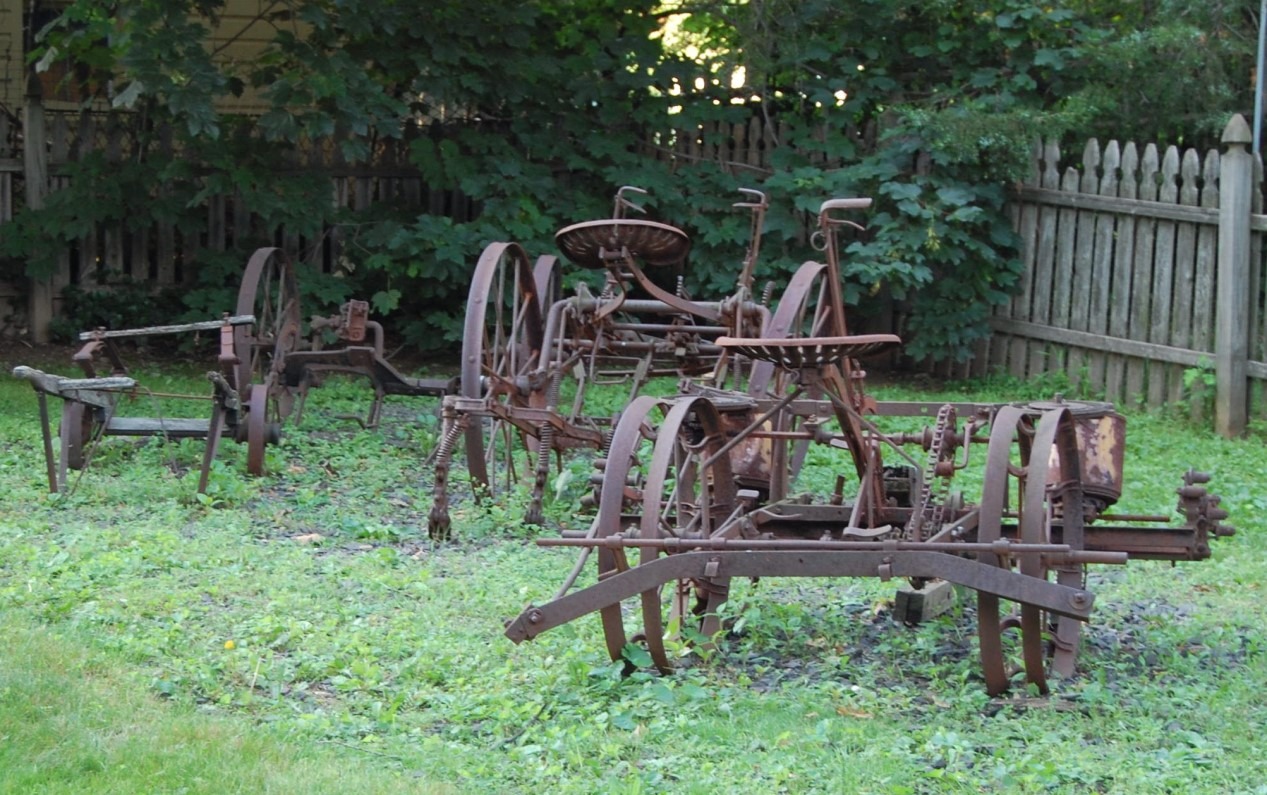
Now that we have discussed farm tractors let’s consider some of the machines that were pulled by them. When a field of grass had grown tall enough to be cut, a long cycle-bar was pulled over it, and its reciprocating cutter blade sheared the grass close to the ground, where it lay drying to become hay. After a week or two, a broad hay-rake was dragged over the field, and its many, large curved tines rolled the hay into bundles to be picked up in a wagon and stored in a barn.
Another tool was a special broad wagon designed as a manure-spreader, and used to fertilize the empty field. In the early spring a gang-plow with its many circular, angled blades was pulled over the field, turning over the earth into many furrows or rows, ready for planting. Planting seeds could be done with a very ingenious machine. This broad tool had a container on each side of it, into which the seeds were placed. As the machine was pulled over the plowed field, thick blades on either side of it cut grooves into the ground. The containers then dropped seeds into the grooves, and as the rear wheels passed over the groove, they pushed the dirt back over it, closing the groove. All of this planting was done with a single pass of the machine over the furrows.
OVER THE BACK PENCE
Bill Frolich says that he disagrees with advertisers and that the best part of waking up is rolling over and going back to sleep.
Frequently Asked Questions
- Who were some notable early members of the Union County Historical Society?
- In 1932 the Society’s membership included Miss Mary Alward, the first woman lawyer in Union County; Edward Grassman, who helped restore Old St. John’s Parsonage; Arthur L. Johnson, later namesake of a county high school; and architect C. Godfrey Poggi, among many others.
- What is unique about the official seal of Union County featuring Hannah Caldwell?
- Research by member Callahan J. McCarthy on several unofficial county seals inspired the Board of Freeholders to adopt the Hannah Caldwell design as the official seal. It is believed to be the only county seal in the United States that depicts a murder.
- How were steam tractors and related farm equipment used on local farms?
- Steam tractors replaced teams of horses by pulling plows, hay rakes, manure spreaders and seed planters. With a single pass across plowed furrows, specialized planting machines could cut grooves, drop seed and cover the rows, saving farmers time and labor.
Related Newsletters
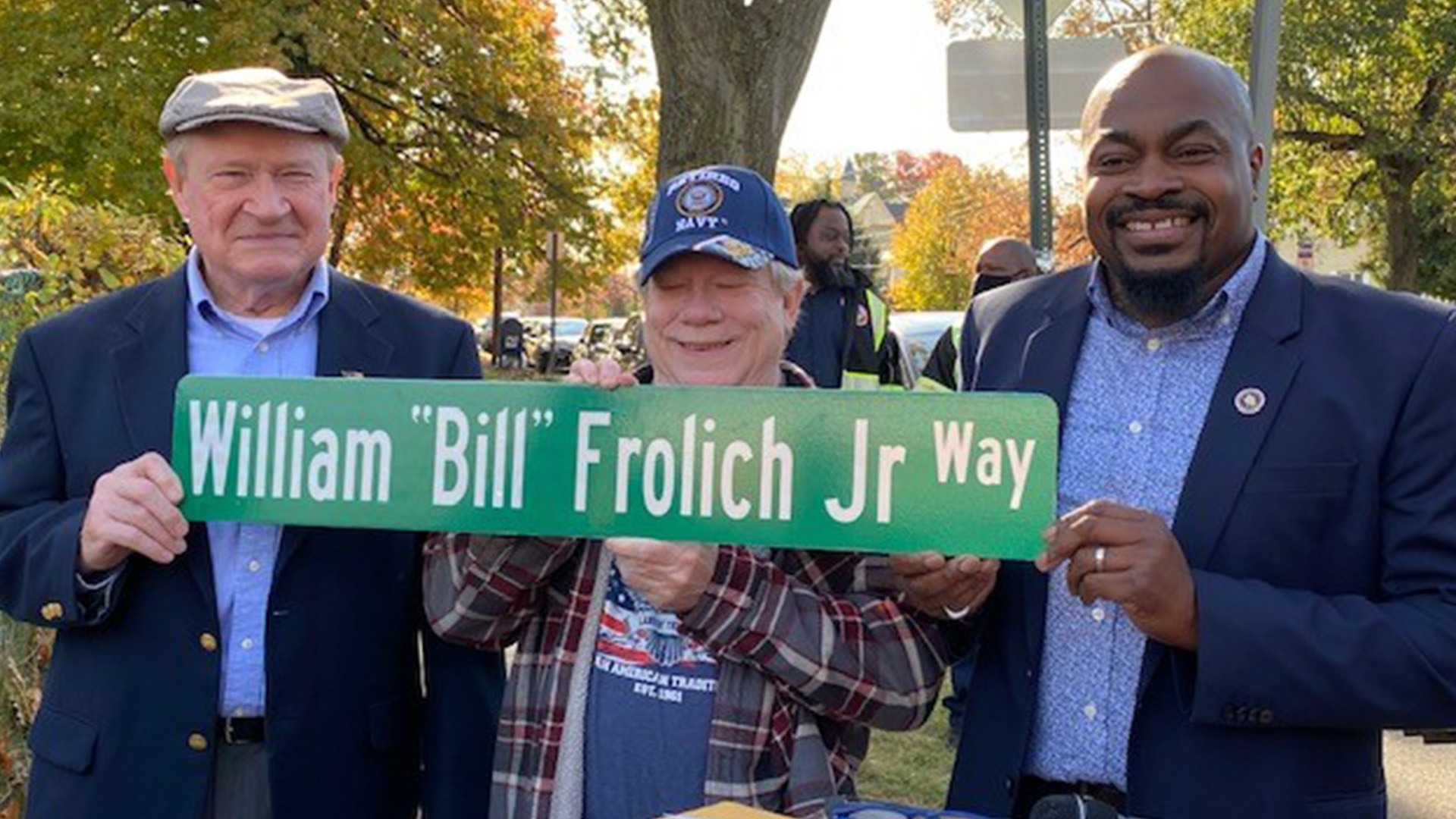
Issue 163 covers a Holiday Open House at Hanson House, Board appointment news, Bill Frolich Way dedication, and vintage laundry & shopping routines.
Issue 162 highlights a Liberty Hall lecture, honors Bill Frolich, and preserves firsthand memories of life in early twentieth-century Elizabeth.
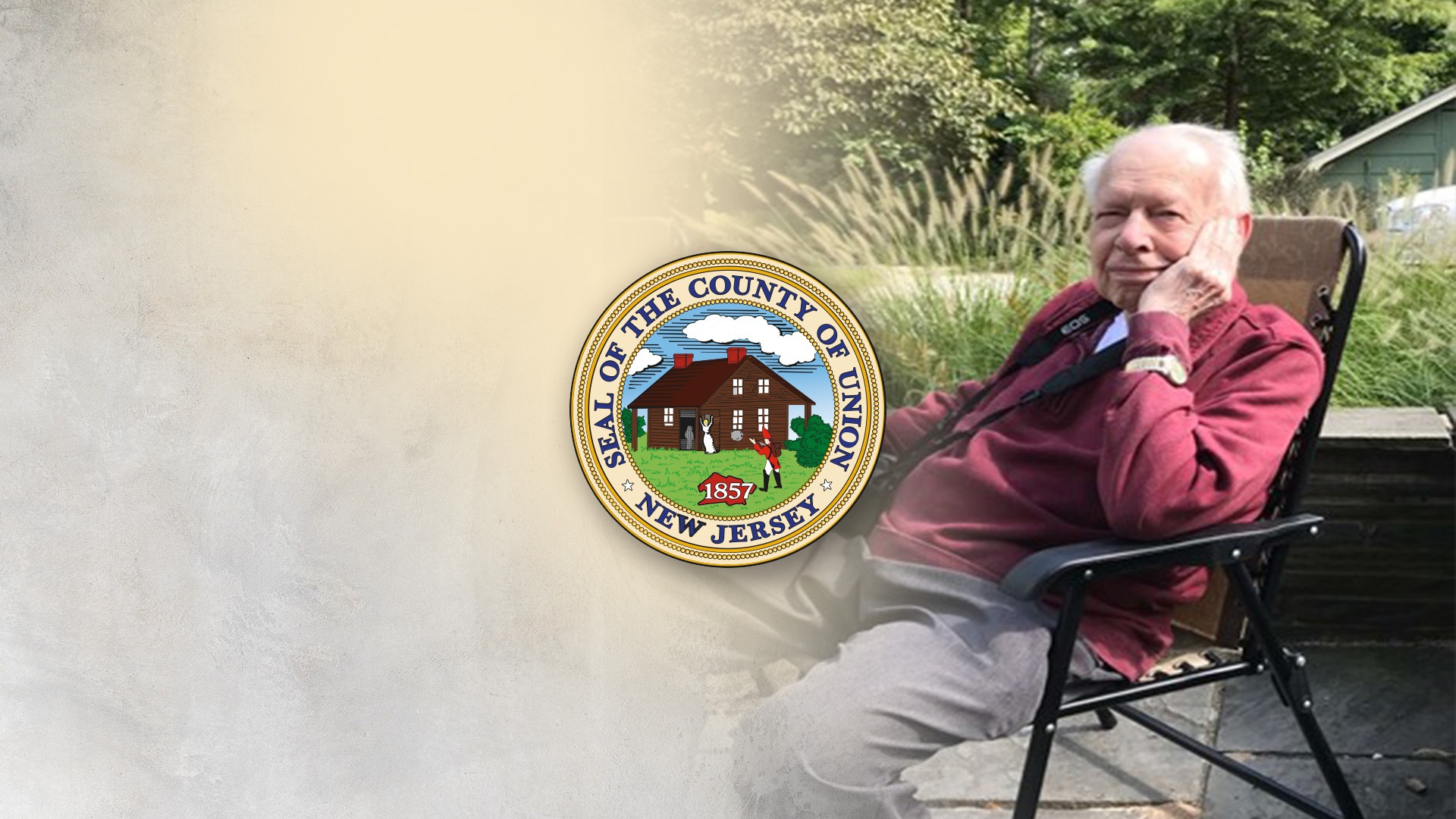



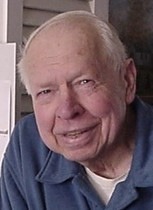 Our longtime friend and Society Treasurer, Bill Frolich, sadly passed away on September 30th 2021. He was 101 years old, a 45-year member of UCHS, and the writer/editor of our Newsletter. Bill and his extraordinary knowledge of Union County history will be greatly missed.